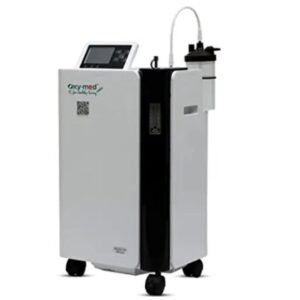
This is an Oxygen concentrator which can be used at home for threapy. This device is originated in India and easy to use
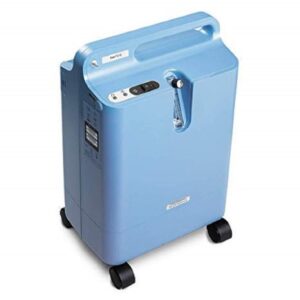
This is a premium device from Phillps which can be used at home for Oxygen therapy. This is a USFDA approved device .
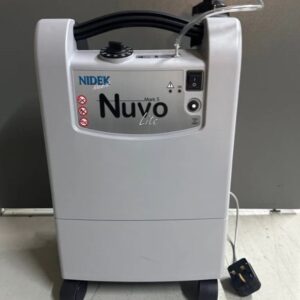
This is a premium device from Phillps which can be used at home for Oxygen therapy. This is a USFDA approved device .
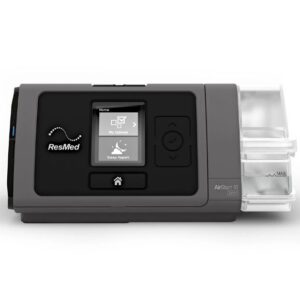
This is an amazing entry level Auto CPAP manufactured by ResMed which can help a patient with OSA. This device comes with an inbuilt humidifier and devcie is compatible with all types of masks. Airstart 10 can deliver the air presures well but has imited comfort features as compaired to premium devices.
IQoro is an exercise tool which is designed by years of research by the Scientists of Sweden. Minimum of 90 seconds exercise per day (Each session with 30 seconds) activates the neuromuscular activity which helps to strengthen total 148 muscles of upper airway. Minimum 4-6 Weeks of regular exercise can help to get significant relief in conditions like Snoring , Acid Reflux , GERD , Heartburn , Lump in the throat feeling , Hiatus Hernia , Dysphagia (swallowing difficulty).
IQoro can be very helpful in Neuro rehabs like post stroke Dysphagia , Respiratory rehabs like Dysphagia in COPD , Acid Reflux/Heartburn due to cancer drugs / gastric issues , Snoring & mild to moderate obstructive sleep apnea.
IQoro : Neuromuscular Training Device and Exercise Tool₹6,998*
How it works : Click here
IQoro Instructions : Click here
• IQoro is recommended in Mild to Moderate conditions. For Severe problems Dr consultation is suggested.
• IQoro is an exercise device and results are subjected to individual use
Add To Cart
Description
IQoro® – How does it work so effectively?IQoro® is currently used by over 30 000 people at the time of writing (July 2020) for treating swallowing, reflux, snoring, sleep apnoea and other problems.
Many people ask how IQoro® can actually have an effect on so many conditions that appear at first to be so diverse. We do not instinctively think of swallowing problems, snoring, reflux, postural control, obstructive sleep apnoea and hiatus hernia as being closely related, so it’s inevitable to wonder, ‘How can they all be treated by the same simple IQoro® training regime?’
1. Understanding the physiological chain and effects of trainingIn the normal course of events, in a healthy subject, there are 148 muscles in the swallowing chain that are commanded and controlled by the efferent motor nerves. When certain of these muscles become dysfunctional the conditions that are treated by IQoro® occur: drooling, poor facial control, poor postural control, dysphagia, Hiatal hernia, reflux, GERD, LPR, sleep apnoea, and more.
It is easy to grasp the idea that rebuilding the muscle strength would therefore help to address them. If a patient presented with an arm that had atrophied because it had been in a sling for three months, we wouldn’t hesitate to recommend a rehab programme based on weights and exercises – and we wouldn’t be surprised when it was 100% successful either. So with IQoro®.
IQoro® exercises the muscles in the orofacial and swallowing processes from the lips, face, mouth, throat, upper airways and esophagus down to the diaphragm and stomach. By closing your lips tightly against the handle and pulling the device forward, a low-pressure is created in the mouth making the tongue retract and seal against the anterior palatal arch and the soft palate. IQoro® flexes and trains the muscles and components along the swallowing chain, and they get stronger.
However, the atrophied-arm parallel can only go only so far in supporting the understanding of the effect of IQoro®.
There are key differences between the arm muscles and the muscles that IQoro® strengthens. The arm is made up of skeletal striated muscles that can be commanded by the individual to flex, and can therefore be consciously exercised – whereas most of the muscles in the swallowing chain cannot. Also, not all the muscles in the swallowing chain are striated – they also include smooth muscles which are controlled and commanded through different nerve types and command systems.
In a patient with neurologically-caused difficulties, there is muscle weakness where lack of normal motor stimulation is the root problem – that is to say that atrophied muscles are mostly a consequence of the lack of normal efferent stimulus. As such, weak muscles are often the symptom, not the cause.
Understanding the neurology, at least in overview, is therefore key in understanding IQoro® function.
2. Researching the importance of the neurologyIQoro® is the result of 25 years’ research, clinical work and dedication by Dr Mary Hägg. She is now Doctor of Medicine, Specialist in Orofacial Medicine, Dentist, Head of Department, Speech and Swallowing Centre, Hudiksvall Hospital, Sweden. In her early career she practiced as a dentist.
In Sweden, a dentist like Mary has the whole orofacial area in her preserve and, as such, many of her patients were asking for a solution to help them with their swallowing difficulties, including stroke survivors.
Her initial work focussed around understanding the relevance of lip force, and her early research identified that there was a clear correlation in lip strength between normal subjects and those with swallowing difficulties. She then developed her first device to exercise the lips and to stimulate the muscles in the swallowing chain, by means of creating a low-pressure area in these channels. It was soon obvious that exercising with an oral screen (later called IQoro®) was having a physiological effect through the whole swallowing chain by exercising the musculature.
This is the part of the IQoro® effect that makes initial sense and that most people readily appreciate. However, this is only a small part of why IQoro® is so effective.
There were other clinical effects observed by Mary and her colleagues than expected. Suspecting that these were related to the effect on neurological damage experienced by her stroke patients Mary continued her research and went on to take her PhD as a Doctor of Medicine at Uppsala University – the neurological aspects that she was certain were key to successful treatment were outside the remit of a dentist.
She continues to work clinically with patients today using her high level of experience and expertise and internationally-recognised and validated outcome tools and measures, whilst still active in further research. Mary has studied with experts in various countries and gained a deep understanding of the neurological aspects of the swallow. She has subsequently lectured and trained clinicians internationally and is now considered by many, to be an expert in her own right.
For details of relevant scientific studies and articles go to: https://www.iqoro.com/en/scientific-research.
3. The neurological effects of IQoro® trainingThe physiological effects of IQoro® have already been described, but parallel neurological processes are also triggered that cause the muscles to strengthen as IQoro® stimulates the nerve pathways and the swallowing sensory-motor reflex arc.
Inserting the IQoro® pre-dentally immediately promotes stimulation of the lips, which is the vital first step. IQoro® design includes scientifically, and specifically-designed and spaced, raised bumps on its outer face which target stimulation of the lips.
The neurological aspect is fundamental to the positive effect of IQoro®. In discussions with Mary, she explains that there is a natural pre-programmed chain of events that must be triggered in the correct sequence – the same chain of events activated during normal eating and swallowing. And this is exactly what training with IQoro® does.
Four sensory Cranial Nerves (CN) are primarily involved. Stimulation of the CN Trigeminus (V) in the lips is the first step. In short order thereafter, the CN Glossopharyngeus (IX) and CN Vagus (X) nerves are also triggered, and then in turn the CN Facialis (XII) nerve too.
The training action of IQoro® activates these four afferent nerve pathways with three ten-second bursts of intense sensory input. These nerves send powerful signals to the brainstem, and in turn the brain sends signals via the motor (efferent) nerves to command and control all 148 muscles involved in the swallowing process. This so-called sensory-motor reflex arc triggers involuntary, autonomic commands to the swallowing chain.
Through all the touchpoints physically addressed, IQoro® triggers afferent pathway activity to the Formatio Reticularis and the body’s natural swallowing process is thus brought in to action.
Not only swallowing is affected. The orofacial, respiratory, and swallowing processes and postural control are all indivisibly interlinked at the neurological level, where the Formatio Reticularis plays a central role in governing all the muscles involved in these functions. This is a key concept in understanding IQoro® effectiveness – training with it exercises all these neurological pathways.
The three swallowing centres are triggered by the IQoro® training action in the following sequence.
The first swallowing centre interprets the training action as that something is to be swallowed, and this instruction is sent to the second swallowing centre.
The second swallowing centre transmits signals to the muscles via the motor nerves – the downward-transmitting efferent nerve pathways. Here, there is a pre-programmed ‘go/no-go’ response: ‘swallow’ or ‘don’t swallow’ – a so-called stereotypical muscle response. When something is to be swallowed the command is sent first to the Nucleus Ambiguus (NA) an efferent nucleus which, in its turn, sends the instruction to swallow to the major components of the swallowing musculature via the motor, efferent nerve pathways.
Concurrently, impulses are also sent to the third swallowing centre.
The five motor nerves that are important for swallowing are: CN Trigeminus (V), CN Facialis (VII), CN Glossopharyngeus (IX), CN Vagus (X) and CN Hypoglossus (XII). The first four are both sensory (afferent) and motor (efferent) nerve pathways.
The sum of all the above signals set off a pre-programmed cooperation between the 148 muscles that are involved in the transport of each food bite from the mouth down to the stomach.
The sensory-motor reflex arc promotes effective connections to the affected musculature, and the communication is rebuilt and strengthened. This manifests itself in improvement in swallowing, and then successively in other functions controlled by these circuits and executed by these muscles. Breathing and postural control function are stimulated and strengthened, as are the pharynx, tongue and soft palate, which accounts for the success of the IQoro® treatment method in addressing snoring and sleep apnoea conditions.
So, we have the two effects of IQoro® on the muscles: one is both physiological and neurological (the upper muscle chain from the lips to the upper part of the esophagus) promoting movement, flexion and strengthening; and a second one, with only a neurological effect. The sensory-motor reflex arc re-initiates or redoubles its activity in stimulating the relevant muscles.
We might intuitively expect a case of muscle weakness caused only by physical factors, to be less complex than if caused by underlying neurological factors. (Compare for example a Hiatal hernia caused by strain, with swallowing difficulties caused by stroke). But in practice, it is usually the conditions with an underlying neurological cause that are successfully treated the fastest. This testifies to IQoro® acting primarily on the neurological aspect.
It also makes sense of our seeing a significant number of cases where a positive result has been achieved by an individual or a clinician after just a few days. This cannot be explained by increased muscle strength – even intense weight training in the gym has little effect in a few days. Instead, it is the improved brain motoric control that has been stimulated.
And, in a clinical study, IQoro® was shown to be exactly equally effective in treating swallowing disorder and impaired postural control in a cohort that presented with both conditions. Some patients recovered from paralysis of the leg. Clearly, IQoro® training had no physical effect on the muscles of the trunk, or the leg – rather the benefits were delivered via the neurological control systems that these two conditions share.
4. Promoting neuroplasticityIn, for example, stroke survivors there may be damage to that part of the brain that was responsible for swallowing. IQoro® training promotes the brain’s tendency to neuroplasticity: stimulating the previous pathways or assisting the brain to re-assign function to an undamaged area. This effect is seen when stroke patients regain their normal swallowing ability; and even when training starts years after the stroke event.
5. IQoro® and Hiatus herniaHere, we must reflect on another weakness of our ‘atrophied arm’ analogy. If we exercise our biceps and triceps we would expect them to build mass and strength; but we would be surprised if there were strength gains in other limbs that were not exercised directly.
In the case of IQoro® training this parallel is not true, all the functions controlled by the neurological centres that we describe can be improved: including those not directly activated by the physical exercise.
This effect is particularly evident when Mary and her research partners and students have explored what happens when IQoro® treats a Hiatus hernia. There is evidence from clinical experience and high-resolution manometry, that the diaphragm is strengthened by IQoro® training – repairing a tear or weakness in the diaphragm muscle.
A Hiatal hernia is a weakening or partial rupture in the musculature of the diaphragm. This rupture can allow part of the stomach and the Lower Esophageal Sphincter (LES) to slide up intermittently into the chest cavity and permit reflux of stomach liquids into the esophagus and beyond. This problem can manifest itself as heartburn, excessive saliva, thick phlegm, persistent dry or wet cough, a feeling of something stuck in the throat or behind the breastbone, gurgly or hoarse voice, etc. This condition is often known as GERD (or GORD), LPR, reflux or silent reflux. It is known to increase the risk of other serious conditions too.
A Hiatal hernia can be the result of a neurological event like stroke or Acquired Brain Injury (ABI): the incidence of Hiatal hernia occurring or being aggravated after stroke is high.
But it can also be purely mechanical: caused for example by pregnancy or lifting heavy weights, alternatively, insufficient chewing, or sedentary lifestyle can be the reason – no underlying neurological cause. The tear or rupture in the diaphragm muscle is outside the esophagus, so creating a partial vacuum in the esophagus cannot have a direct mechanical effect on the diaphragm muscle outside the hiatal canal.
The long longitudinal muscles in the lower part of the esophagus are anchored under the diaphragm muscles and it can be the contraction of these long muscles that lead to the upper neck of the stomach being ‘pulled up’ through the diaphragm when the muscle there is weakened or ruptured.
Physiologically this is the only potential direct physical connection IQoro® training could have to the muscles of the diaphragm, and this is thought to be only a slight contributor to the treatment. Rather it is the sensory-motor reflex arc and the associated motor nerve pathways described above, that empower this natural neurological relay system, and the beneficial IQoro® effect.
6. ConclusionAll can appreciate the effect of IQoro® at a purely physical level – as a muscle exerciser – but this is less than half the story. Its greatest effect is in stimulating the body’s own pre-programmed natural neurological circuits and control.
Dr Mary Hägg emphasises this at every opportunity: her mantra is that the lips are key as one of the most important areas for neurological input. The effectiveness of IQoro® starts from its first contact with the lips.
Produced by: Angie Carter and Terry W. Morris for MYoroface AB. Thanks to Dr Mary Hägg for oversight and instruction.