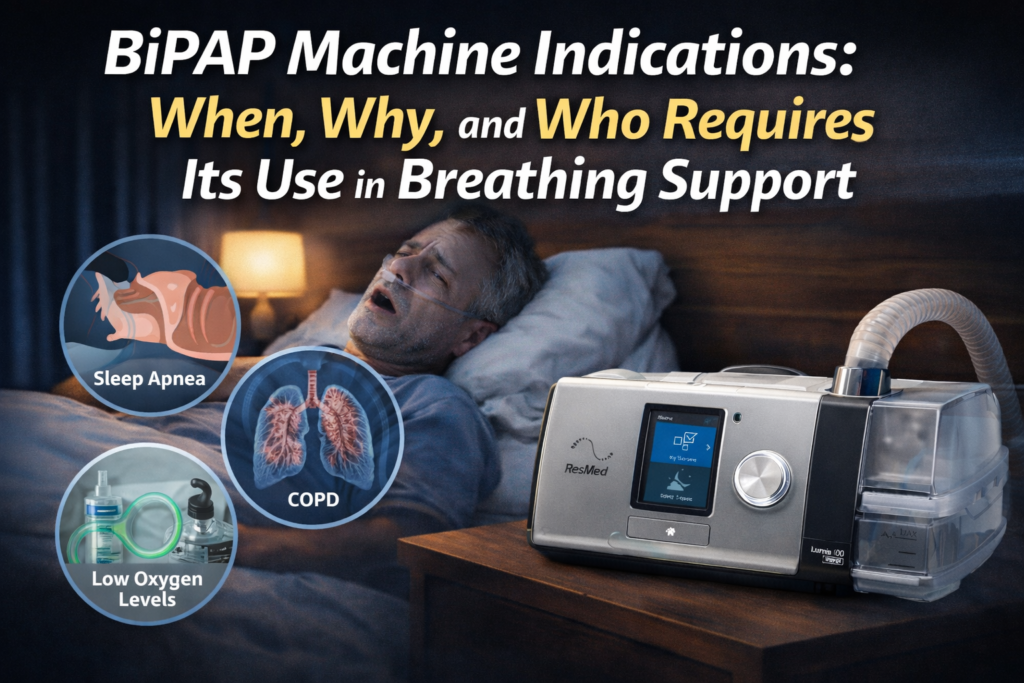
Difficulty in breathing, particularly at night, is a severe health condition and disturbing in millions of individuals in India. Non-invasive respiratory support is frequently recommended by doctors when normal breathing is difficult (including lung diseases, airway diseases, or neurological disorders). BiPAP machine is one of the best provides. Learning about the applications of the BiPAP machine can enable patients and caregivers to make informed treatment choices.
The Question of What a BiPAP Machine Does :
Breathing is aided with the help of a BiPAP (Bilevel Positive Airway Pressure) machine that provides breathing with two air pressure levels:
- IPAP (Inspiratory Positive Airway Pressure) inhalation.
- Exhalation EPAP (Expiratory Positive Airway Pressure)
Such a two-pressure system lowers breathing efforts, and exhalation is easier, particularly with patients, who cannot endure the same pressure as CPAP machines.
The uses of primary BiPAP machines are:
Assistance to patients with difficulties in breathing during sleep.
Stimulating better oxygenation and lessening retention of carbon dioxide.
Lessening the fatigue of respiratory muscles.
When Does a BiPAP Have to be used?
A BiPAP machine is prescribed to patients with:
- Limited or complicated sleep apnea.
- Breathless in the night or choking attacks.
- Reduced oxygen saturation with oxygen therapy.
- Breathing of high levels of carbon dioxide (CO 2) in the blood.
- Inability to exhale with end-expiratory airway pressure.
BiPAP therapy can be suggested in most cases when CPAP therapy does not work and breathing disorders become more complicated.
What Is a BiPAP and Why Is It Preferred to CPAP?
The BiPAP machine is also used in patients who are unable to tolerate CPAP. CPAP provides only one fixed pressure and this pressure may be uncomfortable to some patients. BiPAP, in its turn, reduces the pressure during exhalation, which makes the breathing feel more natural.
BiPAP is preferred when:
- CPAP leads to the discomfort or shortness of breath.
- The patient suffers COPD or post-COVID pulmonary damage.
- It is not only airway support, but also ventilatory assistance.
Who Needs a BiPAP Machine?
Patients with the following conditions may require the use of a BiPAP machine:
- Central or severe obstructive sleep apnea.
- COPD is a lung disease characterized by long-term coughing, shortness of breath that worsens over time, and persistent phlegm.
- Post COVID respiratory weakness.
- Hypoventilation syndrome of obesity.
- Neuromuscular diseases.
- Non-invasive ventilation to rescue respiratory failure.
BiPAP machines are usually worn at home particularly in the long term or night respirators with medical attention.
BiPAP Machine Uses at Home
Contemporary BiPAP devices are small, noisy and home based. At home uses of Common BiPAP machine include:
- Nocturnal respiratory assistance.
- Minimizing dependence in the hospital.
- Enhancement of the quality of sleep and oxygen.
- Respiratory management in the long term.
When a doctor prescribes the pressure settings and the machine is maintained, it is safe in home use.
Frequently Asked Questions
What are the primary applications of the BiPAP machines?
BiPAP machines are applied to assist in breathing in disorders such as sleep apnea, COPD, post-COVID lung dysfunctions, and respiratory failure giving support with both pressure settings.
Is BiPAP machine utilized only in cases of sleep apnea?
No. The COPD, neuromuscular disorders, obesity hypoventilation syndrome and post-COVID breathing issues are also included among the COPD uses of BiPAP machine.
Is a BiPAP device effective in enhancing oxygen?
Yes. BiPAP machine can be used to aid breathing and ease lung effort and thereby improve the oxygenation and decrease CO 2 retention.
Can a BiPAP machine be used in the home in the long term?
Yes, with proper settings and under the care of a doctor, BiPAP machines could be safely employed in long-term home therapy.
What happens when BiPAP is applied as opposed to oxygen therapy?
BiPAP is also applied in cases where oxygen is not enough and the patient requires breathing support, as opposed to oxygen support.
Conclusion
The knowledge on the application of BiPAP machines is essential to patients with persistent breathing problems. BiPAP machines can be considered an important part of the breathing process, sleeping, and quality of life since it improves the former, the latter, and sleep quality. BiPAP therapy is a safe, effective and home based respiratory support method that can be used with medical attention on a long term basis.