What Is a BiPAP Machine? Applications, Advantages and Helps in Breathing Aids.
Difficult breathing, especially when one is asleep or when a person is sick, may drastically affect the quality of life. Under circumstance where the normal breathing becomes laborious, non-invasive respiratory support devices are regularly advised by physicians. The BiPAP machine is one of the most commonly used machines.
The following guide will help in explaining the definition of a BiPAP machine, its operation, those who can use it, and its role in providing respiratory assistance within a home-based environment.
What Is a BiPAP Machine?
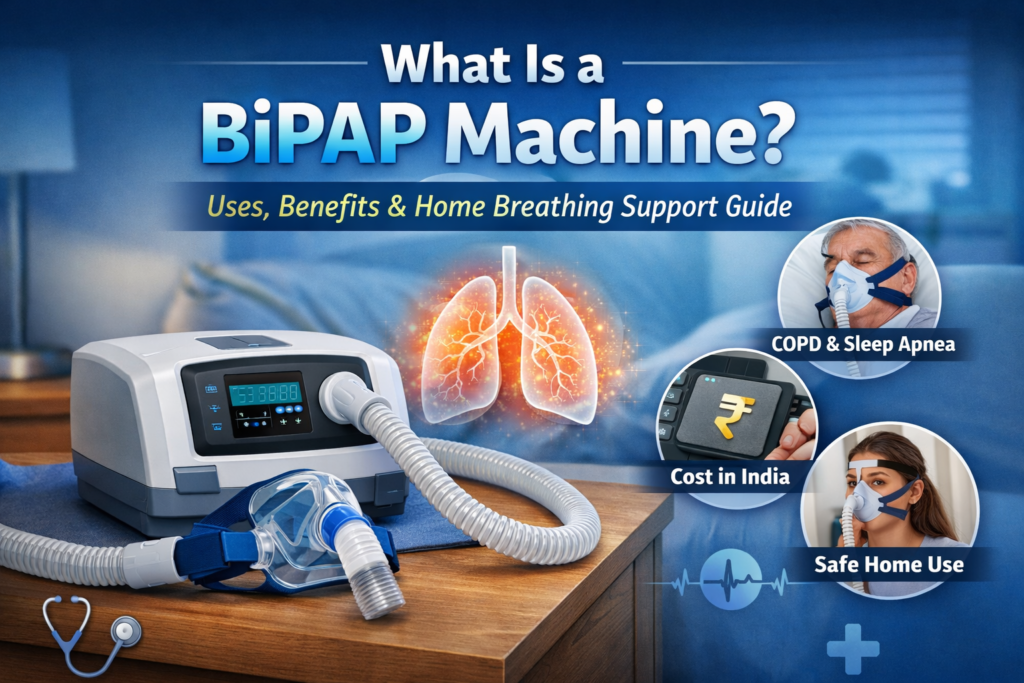
An example of such device is a BiPAP (Bilevel Positive Airway Pressure) machine, which is a non-invasive respiratory support device that aims to provide two different levels of air pressure in order to help the person breathe more comfortably. It gives the lungs a greater pressure when breathing in and a lower pressure when breathing out, thus reducing the effort spent in breathing.
A BiPAP machine is a dual-pressure breathing device that helps people with COPD, sleep apnea and respiratory illness breathe more easily at home or in hospitals.
It is widely applied to patients with pulmonary diseases, sleep disorders, and any other respiratory complications that require additional breathing aid.
How Does a BiPAP Machine Work?
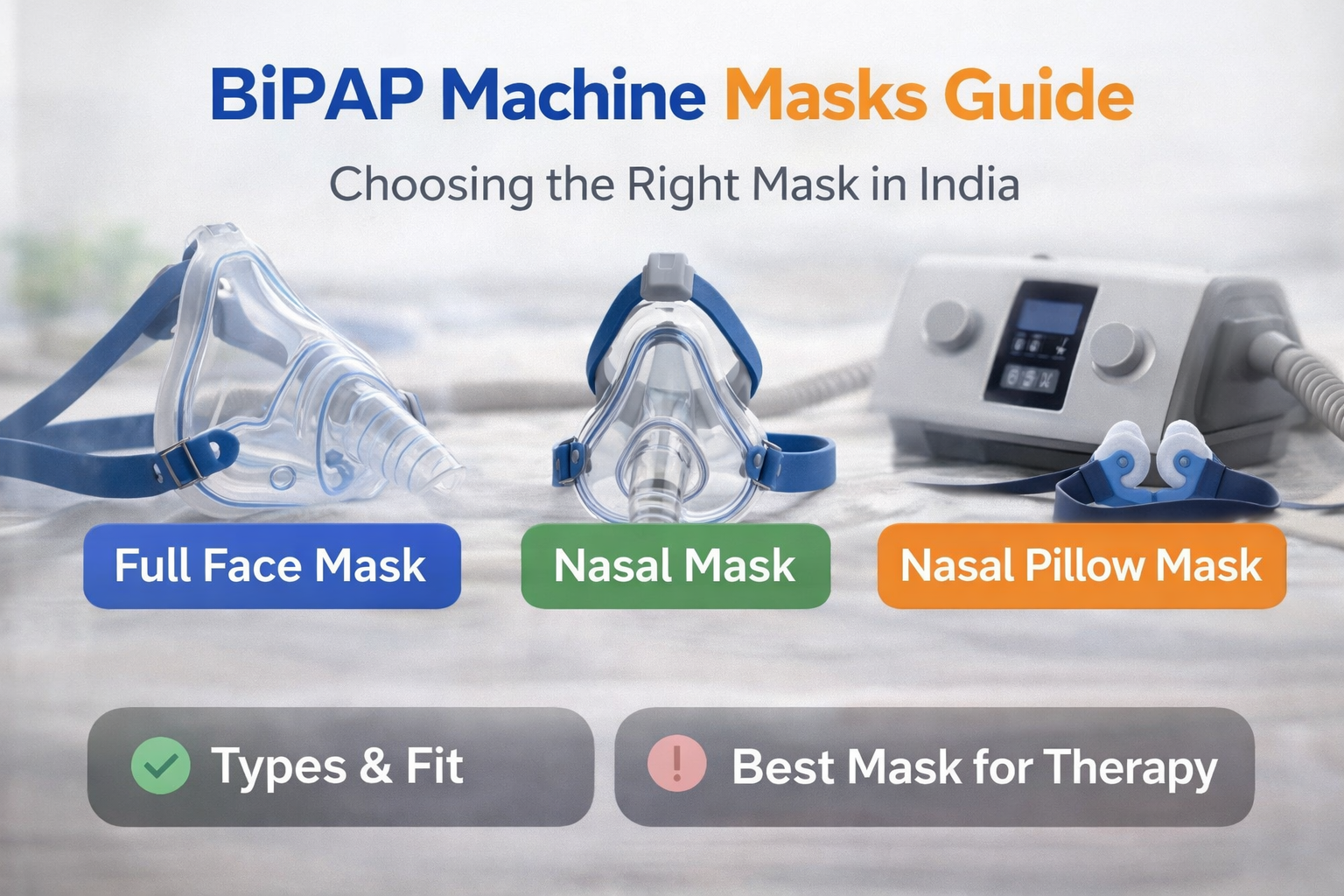
A BiPAP machine involves the pressurised air to be forced through a mask over the nose or mouth. The device delivers:
- IPAP (Inspiratory Positive Airway Pressure) -an increase in pressure during inhalation.
- EPAP (Expiratory Positive Airway Pressure) – a lesser pressure during exhalation.
This dual-pressure system is made in order to:
- Maintain airway patency
- Enhance oxygen intake
- Reduce breathing effort
- Avoid collapse of airways at night.
Since it aids in exhalation, BiPAP is commonly said to be more comfortable than single pressure equipment.
Who Needs a BiPAP Machine?
Doctors prescribe BiPAP treatment in case a patient has problems with independent breathing. Common indications include:
- Pulmonary Disease, Chronic Obstructive Disease (COPD).
- Sleep apnea (moderate to severe cases)
- Respiratory failure
- Neuromuscular disorders
- Excessive body weight hypoventilation.
- Pulmonary weakness after COVID.
- Extreme asthma complications.
BiPAP support can be used in patients with nocturnal dyspnea, hypoxemia, or hypercapnia.
In what cases do physicians prescribe BiPAP Therapy?
A BiPAP machine can be ordered under such situations as:
- Sleeping is accompanied by difficulty in breathing.
- Saturation of oxygen drops repeatedly.
- The concentration of carbon dioxide increases in the blood.
- Patients are released but still need respiratory support.
- Pulmonary diseases become chronic.
BiPAP machines are widely used either in the hospital or as a way of home care.
The Advantages of BiPAP Machine.
The BiPAP therapy has a number of health and lifestyle benefits:
- Lowers breathing effort
- Enhances circulation of oxygen.
- Enhances sleep quality
- Minimizes hospital readmission.
- Helps overcome respiratory ailment.
- Increases alertness and activity.
- Gives safe respiratory assistance at home.
It is a necessity of day-to-day breathing to a significant number of patients.
BiPAP vs CPAP What is the difference?
Several individuals confuse between CPAP and BiPAP machines. Although they both aid breathing they act in different ways.
Is it possible to use a BiPAP Machine at home?
BiPAP machines are also commonly employed in domiciliary respiratory support. Proper medical advice will see patients use the device safely at home.
Home use assists in:
- Reducing hospital visits
- Post-discharge care of respiratory disorders.
- Enhancing comfort in the state of convalescence.
- Consultations give pressure settings and instructions of usage in order to have safe therapy.
Are There Any Side Effects?
The use of BiPAP is tolerated generally, although certain side effects might be experienced by some users:
- Dry nose or throat
- Skin irritation from mask
- Bloating due to air pressure
- Initial mild discomfort
The majority of the side effects may be controlled with the help of modifying the mask fit, humidifier settings, or pressure.
Safe Use of BiPAP Machine at home.
Use safely by following the following steps:
- Wear the mask correctly and well fitted.
- Start the machine with recommended pressure levels.
- Wash the mask and tubing frequently.
- Observes comfort and breathing patterns.
- Follow doctor guidelines on the use of time.
Regular utilization makes use effective and comfortable with time.
Key Takeaways
- BiPAP machine is a machine used to provide the respiration with two air pressures.
- It is generally used in COPD, sleep apnoea, and other respiratory diseases.
- The device enhances oxygen saturation and lowers the breathing load.
- Bipap therapy may be safely conducted at home under the control of the physician.
- It is a significant enhancement of sleep quality and recovery.
Frequently Asked Questions
What is the full form of BiPAP?
Bilevel Positive Airway Pressure is abbreviated as BiPAP.
Is BiPAP better than CPAP?
BiPAP is better than CPAP because BiPAP is effective in the cases of those who need advanced respiratory assistance and CPAP is effective in the cases of mild sleep apnoea.
Can BiPAP be used every day?
Yes, BiPAP is used by many patients in the form of long-term respiratory treatment.
Does BiPAP enhance oxygenation?
Yes, it helps with a better oxygenation and abatement of carbon dioxide build-up.
Is BiPAP safe for home use?
Yes, when used in accordance with the order of a medical worker.
The duration of patient BiPAP performance is how long?
The period is determined by the medical background and the recommendation by the doctors.