Quick Answer
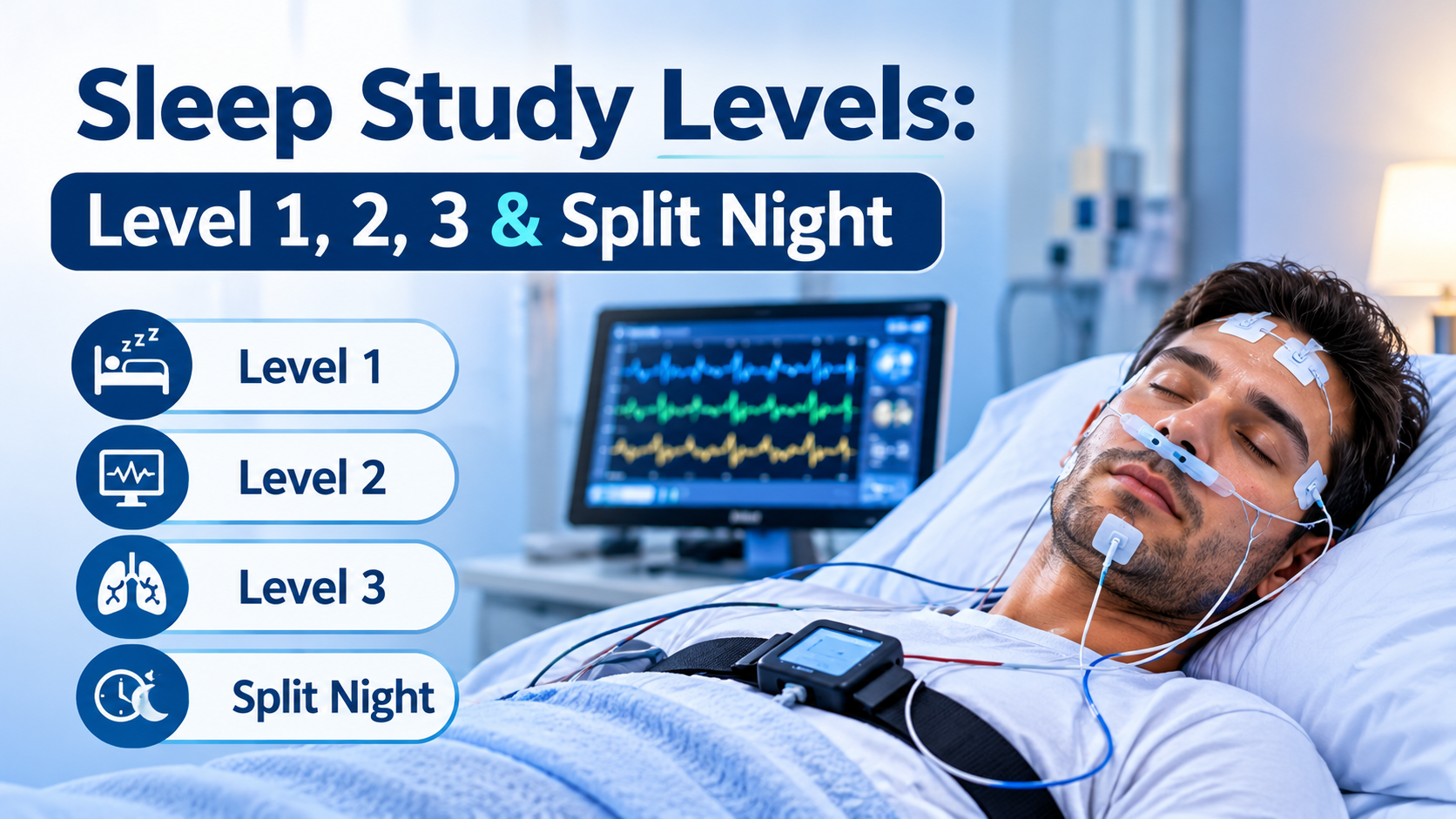
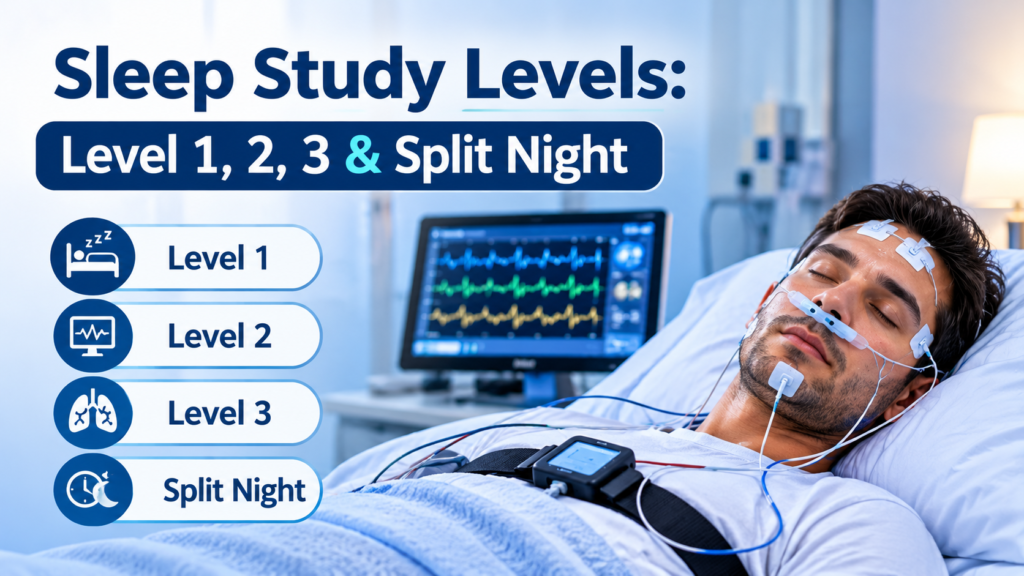
A sleep study is classified into different levels (Level 1, Level 2 and Level 3) based on where the test is performed, the number of body signals monitored, and the type of sleep information recorded. A Level 1 sleep study is a fully attended overnight test conducted in a sleep laboratory, while Level 2 is a comprehensive sleep test that can be performed without continuous technician supervision. A Level 3 sleep study is a limited-channel test commonly used at home to assess breathing patterns, oxygen levels and other signs of sleep apnea.
A Split Night Sleep Study combines two procedures in one night, the first part records sleep-related breathing problems, and the second part involves CPAP titration to determine the appropriate air pressure for treatment, if clinically indicated. The right sleep study depends on the patient’s symptoms, medical history and the doctor’s recommendation.
Quick Overview Table
| Sleep Study Level | Where Is It Performed? | What Does It Monitor? | Common Purpose |
|---|---|---|---|
| Level 1 Sleep Study | Sleep laboratory or hospital | Brain activity (EEG), eye movements, muscle activity, heart rate, breathing, oxygen levels and body movements | Comprehensive evaluation of sleep disorders, including sleep apnea |
| Level 2 Sleep Study | Usually at home (unattended) | Similar comprehensive signals to Level 1, including brain activity, breathing, heart rate and oxygen levels | Detailed sleep assessment without continuous technician supervision |
| Level 3 Sleep Study | Usually at home | Breathing airflow, respiratory effort, heart rate and blood oxygen levels | Primarily used to evaluate suspected obstructive sleep apnea |
| Split Night Sleep Study | Sleep laboratory or hospital | Initial diagnostic monitoring followed by CPAP titration during the same night | Diagnosing sleep apnea and assessing CPAP pressure requirements in eligible patients |
Note: Split-night is a testing protocol, not a separate sleep study level. It combines diagnostic polysomnography and PAP titration when the patient’s findings and available recording time make this clinically appropriate.
Sleep Study Levels are used to track brain activity, track breathing, oxygen levels, and movements during sleep. There are different categories of sleep study test which are based on the location of the test and parameters they do monitor.
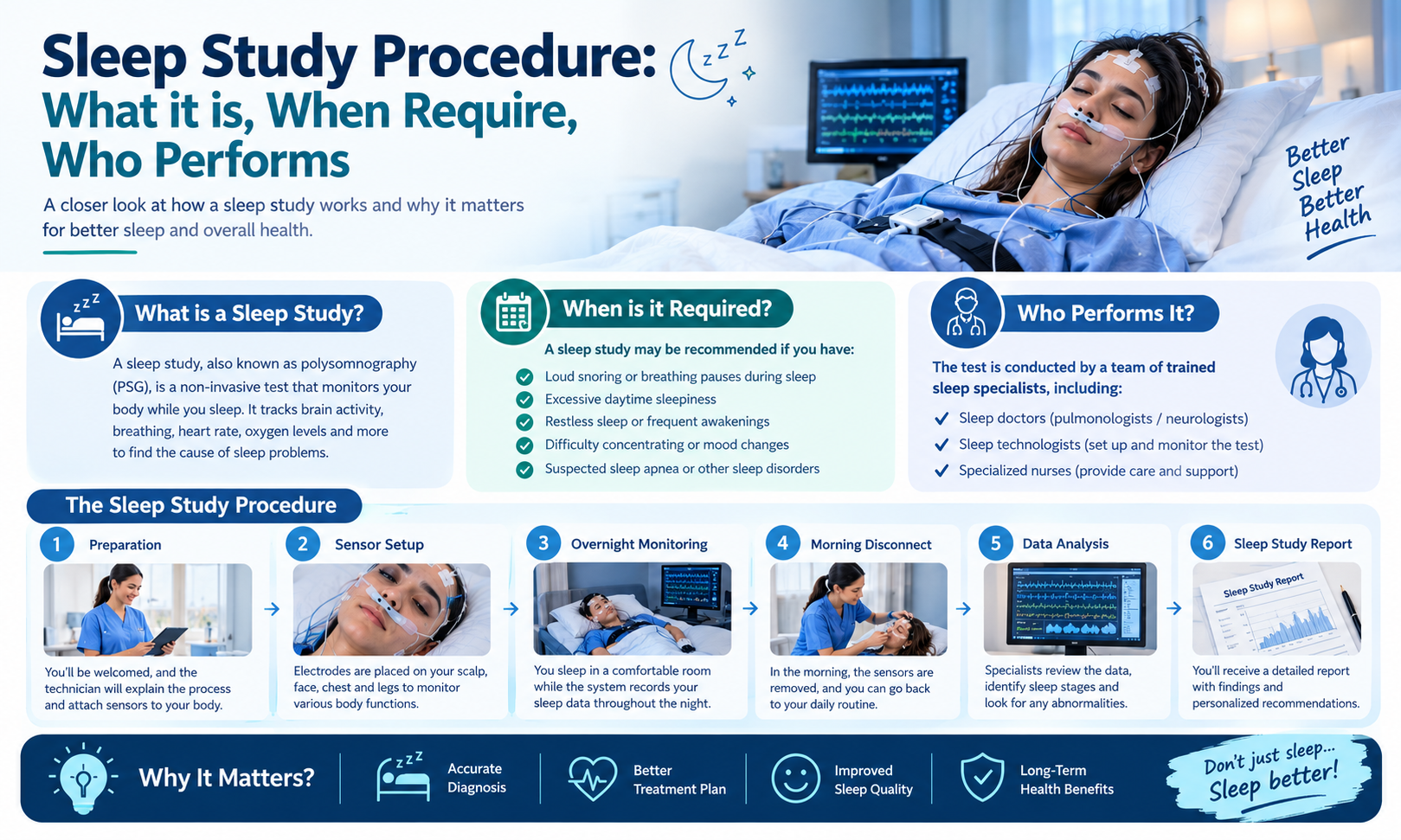
Sleep Disorders are often diagnosed through a sleep study which is also referred to as a sleep test. The purpose of a sleep study is to track the amount of sleep you get each night, along with your breathing and overall nighttime activities.
Healthcare providers may recommend a study based on the measurements needed and your clinical assessment. There are basically three sleep study levels and a Split night study test given below.
- Level 1
- Level 2
- Level 3
- Split Night Study Test
Each of these study levels help you identify a different sleep condition. The exact equipment and terminology can vary by provider. There are several levels of sleep studies, Level 1, Level 2, and Level 3.
All of them vary by how much is monitored and tested for. It also depends on where the test will take place. Therefore, let’s explore some of those differences so we can determine which level of sleep study would be best suited for you.
What are Sleep Study Levels?
Sleep Study levels are different methods which are used to monitor the body’s activities during sleep. The studies can include various metrics recorded based on each level.
Let us start collecting information about each of the Sleep Study Levels below.
Level 1 Sleep Study: Full Polysomnography
A level 1 sleep study is usually referred to as an attended In-lab based study with polysomnography (PSG). This type of test provides a complete review of many physiological body functions during sleep.
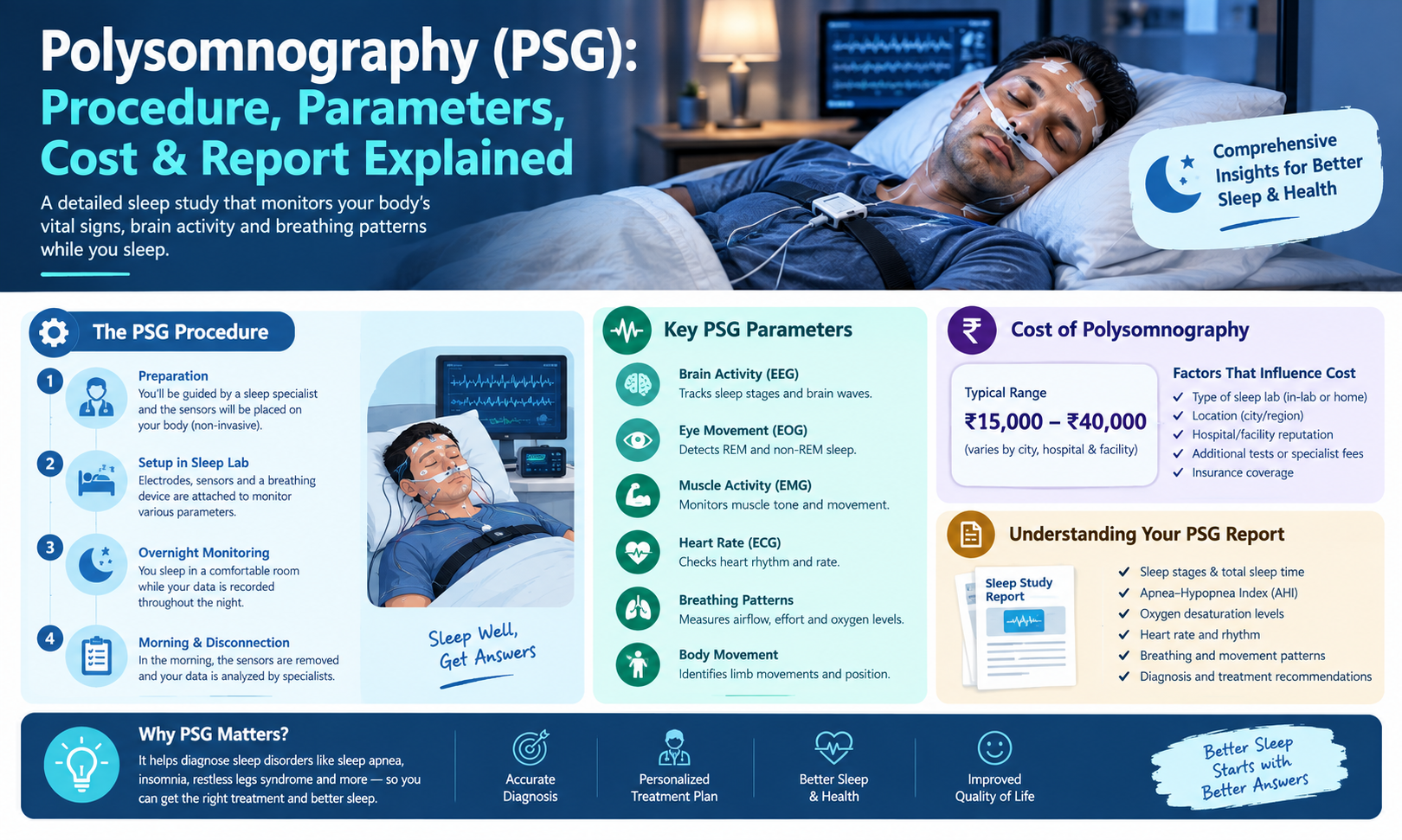
A PSG monitors for different types of sleep related functions. These can include:
- Respiratory function
- Body oxygen levels
- Brain wave patterns
The recordings are usually made while a technologist watches over them in a sleep laboratory.
Level 1 study tests also include the following tests.
- Brain waves (EEG): This one provides information about when the patient is asleep, awake, and at what stage of sleep.
- Eye movements (EOG): This assists in identifying REM and non-REM sleep stages.
- Muscle activity (EMG): It monitors selected muscles during the night.
- Cardiac activity (ECG): It provides data on the electric activity of the heart.
- Blood Oxygen Saturation (SpO2): It records how much oxygen there is in the blood at all times.
- Breathing (air flow): It monitors the amount of air flowing into and out of the nose and/or mouth.
- Breathing Effort (chest and abdomen movement): It provides data on the chest and abdominal wall movement associated with breathing.
- Snoring: If available, this will record snoring sounds via an appropriate sensor.
- Leg Movement: This measurement assists in diagnosing movement disorder related sleep issues.
- Patient Positioning: Provides positioning of the patient at rest.
Each of the previously mentioned studies may vary depending upon your physician’s order and the type of equipment used.
This test is best suited to find complex sleep disorders, non breathing disorders or severe cases.
Where Do You Take a Level 1 Sleep Test?
A level 1 sleep test is typically conducted in a specialized sleep lab (sleep center) or a hospital. There will be a technician present who monitors your sensor application, maintains signal integrity throughout the test and can address any issues related to the equipment operation during the time you are being tested.
You’ll spend the entire night in the testing facility. The equipment used in this type of testing continuously records all of the essential physiological signals needed to diagnose most types of sleep disorders.
When Will I Need a Level 1 Sleep Study?
Your physician may suggest comprehensive polysomnography when they need a full picture of how well you’re sleeping or breathing while you’re asleep.
Comprehensive polysomnography may be recommended when there is reason to believe that you have a sleep-related problem which might require diagnosis.
Your doctor may recommend a Level 1 study if a home sleep apnea test is unsuitable for you or if an earlier home test was inconclusive.
If you have other significant health conditions (for example heart or lung disease), your doctor may recommend an in-lab study, as it allows closer monitoring and a fuller evaluation.
A clinical evaluation tells which study is best for you not solely based on the symptoms you notice.
Level 2 Sleep Study
A Sleep Study Level 2 also known as Unattended Polysomnography which refers to comprehensive portable polysomnography that does not involve a technologist’s presence over-night.
However, like Level 1 studies, the devices classified under this category must record signals representative of several of the major categories including
- Brain waves
- Eye movements
- Muscles contractions/relaxations
- Heart rate
- Oxygen levels
- Air flows into/out of lungs and respiratory efforts.
The exact sensors recorded are chosen or recommended by your healthcare expert. Because these studies cover all the signal areas above, Level 2 studies differ significantly from limited-channel respiratory studies.
This test is based for detecting periodic limb movement disorder (PLMD) and Diagnosing Obstructive Sleep Apnea (OSA).
Can I have My Level 2 sleep Study at Home?
You may perform your Level 2 sleep Study at Home if your clinical Study plan allows it, along with having access to proper equipment and adequate service arrangements.
Here are the general steps involved in conducting a Level 2 sleep Study at Home:
- Scheduling your test: Make sure your prescribed Study has been confirmed with your appointment date and time, along with confirming the equipment that will be sent to you.
- Obtaining your equipment: When you are done scheduling your test and receiving confirmation regarding sending you the equipment you need to complete your Study. Make sure you follow the provider’s instructions for getting it all at a place.
- Preparing for data collection: If necessary you might get help applying your electrodes/sensors as directed in the User instructions manual.
- Conducting data collection during sleep: When you are wearing the equipment collect the signals required for analysis of your sleep.
- Returning your equipment: You need to return your completed data collection unit(s) as instructed by the provider.
- Study interpretation Report Preparation: The collected data will then be analyzed by the service provider according to their clinical process.
Note that each provider is different and therefore your actual workflow may vary depending on your service provider.
Also Check: Home Sleep Study
Level 3 Sleep Study
A level three sleep study will use some type of portable equipment to capture a limited number of different types of physiological (body) signals associated with respiration. This type of sleep study is common in home sleep testing protocols for adults who have been identified as having possible obstructive sleep apnea.
In comparison to comprehensive PSG (polysomnography), which captures all possible physiological signals, a standard level three study captures significantly less information about the patient.
However, a level 3 study will capture the most relevant physiological signals to identify how often the individual stops breathing during their sleep. This study will focus primarily on the physiological signals that relate to breathing and the percentage of oxygen in the blood (oxygen saturation) during sleep. PSG measures the specific waveforms present on the electroencephalogram (EEG) during each stage of sleep.
What Does a Level 3 Sleep Study Capture?
Depending upon the device being utilized in the home study, a level three study may record:
- Airflow: This signal measures airflow into and out of the lungs.
- Respiratory effort: This signal records the movements of the chest wall or diaphragm as they occur during breathing.
- Oxygen Saturation: This signal tracks fluctuations in the percentage of hemoglobin-bound oxygen molecules within the blood as measured during the recording session.
- Pulse or Heart Rate: Depending upon the particular device(s) being employed, this signal may track variations in pulse rate or rhythm.
- Body Position or Snore Sounds: If your device includes these features and you choose to activate them, your body position and/or snore sounds may be captured and analyzed in addition to your other physiological signals.
Level 3 Sleep Study at Home
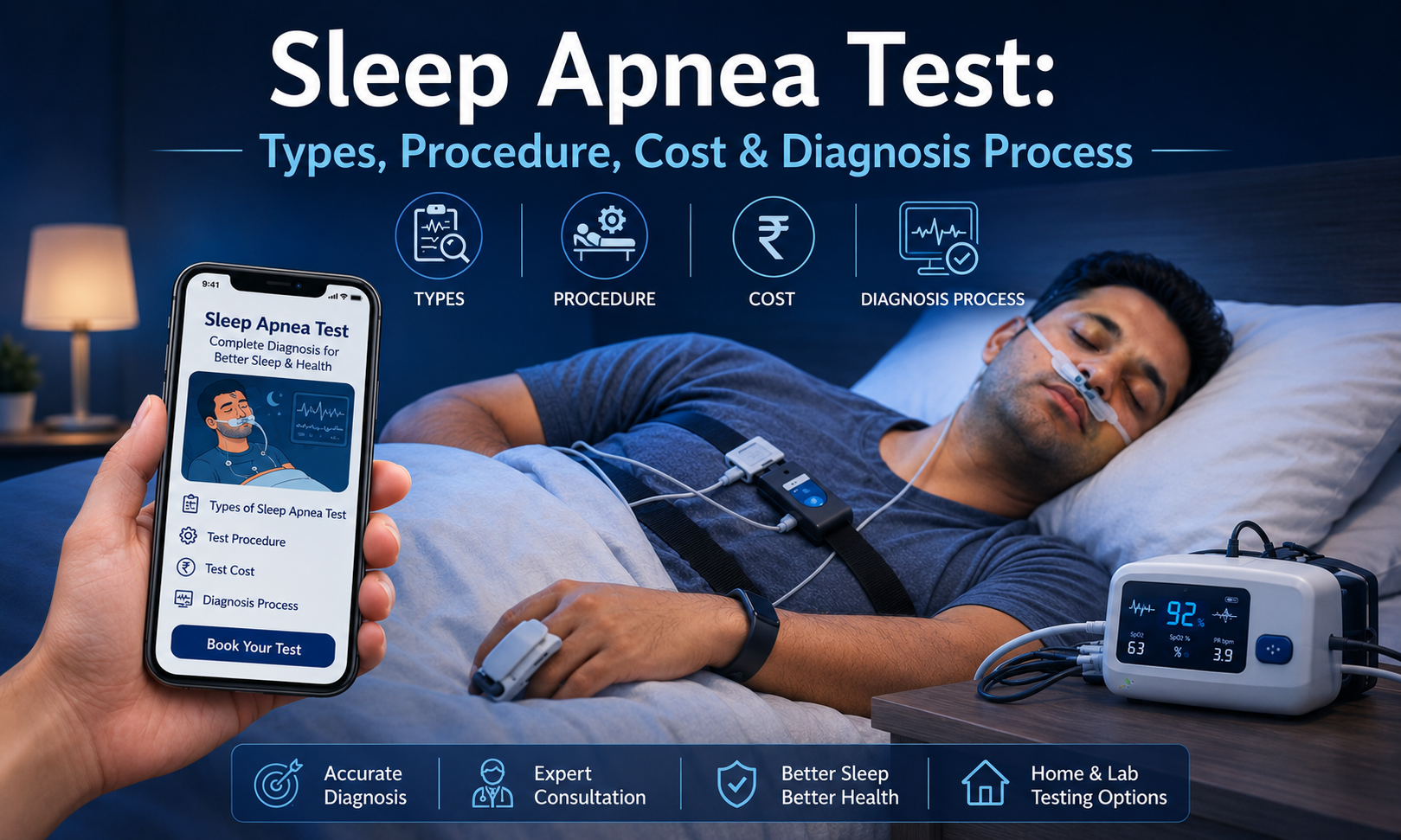
The Level 3 Sleep Study process is also known as Home Sleep Apnea Test (HSAT). Once the equipment has been properly installed, the individual wears the equipment throughout the night and collects data. Most at-home studies require the individual to collect and set-up the necessary testing equipment.
- Unattended Portable kit with a simplified sensor kit
- Focusing primarily on airflow, heart rate, blood oxygen levels, Breathing activity and more.
- This Sleep study is best for moderate to severe obstructive sleep apnea.
When the recording session completes, you will either have to return the equipment back to the Breathenest via courier or drop-off your collected data according to the direction provided by Breathenest. Your data will then be reviewed and a report generated based on your recordings.
Also Read: Sleep Study Procedure
Which Sleep Study Level Is Best?
There isn’t one sleep study that is right for everybody. The most effective sleep study will depend upon the question your doctor wants to answer about you.
A complete overnight laboratory sleep study would be the right way to go if you require specific sleep stage data, or want to get a broad assessment of all aspects of your sleep.
For someone who has simple sleep apnea, and is a healthy adult with symptoms that suggest their osa is moderate to severe then a home sleep apnea test would be an acceptable option.
Several factors plays important role:
- Presence of medical condition
- What type of symptoms you’re experiencing
- Potential for additional sleep disorders beyond obstructive sleep apnea
You’ll find it beneficial to discuss the various options available with a health professional trained in sleep studies instead of making a selection due to price, convenience or the number of levels involved.
Also Read: Sleep Study Price in India
What Is a Split-Night Sleep Study?
Split Night includes both polysomnographic (psg) Diagnostic data and positive airway pressure (PAP) titration in the same nights as long as they are clinically warranted.
In the beginning phase of the polysomnography, data regarding both your sleeping and breathing is collected to help confirm if obstructive sleep apnea (osa) exists. It also tells how serious your respiratory abnormalities are currently. When clinical and recording requirements are met, the remainder of the night’s data may be utilized to optimize PAP treatment pressures.
Split nights are a clinical protocol to be used at times. Therefore, do not represent a distinct Level 1, level 2 or level 3 designation.
How Do I Know How a Split Night Will Be Conducted?
Check the process of conducting the Split Night test below.
1. Diagnostic monitoring phase
Polysomnography is performed on the patient. Data regarding sleep related signals, breathing patterns, oxygen saturation and other pertinent parameters are captured using the polysomnography system.
2. Review of initial recording
The recorded data regarding your breathing events is evaluated by the sleep staff. They determine if the criteria for advancing to titration are met.
3. Titration Phase
Positive airway pressure treatment is initiated. Under the direction of clinical protocols, the PAP pressure is titrated to assess how well your respiratory abnormalities are being managed.
4. Report & Clinical Review
Both the Diagnostic and titration results are documented. These results are reviewed to assist with your continued clinical management.
Not all cases are appropriate for a split-night protocol. Enough Diagnostic data must exist, and sufficient time must remain in the recording to perform a reasonable titration. It will ultimately be up to your clinical team to decide if a split-night is appropriate in accordance with their established protocol.
When Is a Split Night Study Utilized?
It may be reasonable to use a split night study where obstructive sleep apnea is diagnosed early in the Diagnostic polysomnography, and where your clinician feels that you meet the criteria for proceeding with PAP titration.
Whether it is possible to utilize a split-night study will depend on many variables including severity of breathing abnormalities, quality of the recording, amount of time available for titration, etc.
If you don’t meet the criteria for advancement into titration, you may have to continue without titration. You may plan for treatment pressure adjustments during a separate visit to your sleep team.
Get Free Quotes From Breathenest For Your Sleep Study Levels
Get expert advice on your Sleep Study levels along with how you can plan your recommended test easily in the best condition possible.
Hurry, talk to our team and get the best guidance on your Sleep Study Test today!
Also Check: Sleep Study Machine
FREQUENTLY ASKED QUESTIONS (FAQs)
Q1. How Do I Understand the Types of Sleep Study Descriptions (Levels)?
Ans: Sleep studies have three major levels including, Level 1, Level 2 and Level 3 classification that represent attended laboratory polysomnography, comprehensive unattended portable monitoring and limited channel respiratory monitoring respectively.
Q2. What Does A Level 1 Sleep Study Mean?
Ans: Level 1 represents full-service attended polysomnography in a sleep lab setting. This level includes a combination of all possible signal types, including:
- Brain wave activity
• Eye movement tracking
• Muscle activity monitoring
• Heart rate/heart rhythm activity
• Air flow through the upper airways
• Respiratory effort tracking
• Oxygen levels tracking
Q3. What does a Level 2 Sleep Study mean?
Ans: A Level 2 study is a complete, portable polysomnograph, without requiring a technician to be present during the entire duration of the test. All of the main categories of signals recorded in a Level 1 test (i.e., brain wave activity, eye movement, muscle activity, cardiac rhythms, airflow, respiratory effort and blood oxygen levels), are recorded using this method.
Q4. What does a Level 3 Sleep Study mean?
Ans: A Level 3 study means it is a level of portable monitoring, which is a limited channel. Only a few signals mostly related to respiration, like flow, effort, saturation and heart rate are recorded. This test is usually conducted at home for people who are suspected of having Obstructive Sleep Apnea, and it is known as a Home Sleep Apnea Test (HSAT).
Q5. What are the primary differences among Level 1, Level 2 and Level 3 Sleep Studies?
Ans: The primary difference in these tests relates to the testing environment and what signals are being captured during each type of testing. Generally, Level 1 is conducted in an attended laboratory polysomnography setting, Level 2 is comprehensive portable polysomnography in an unattended setting, and Level 3 is limited channel portable monitoring capturing primarily respiratory related signals.