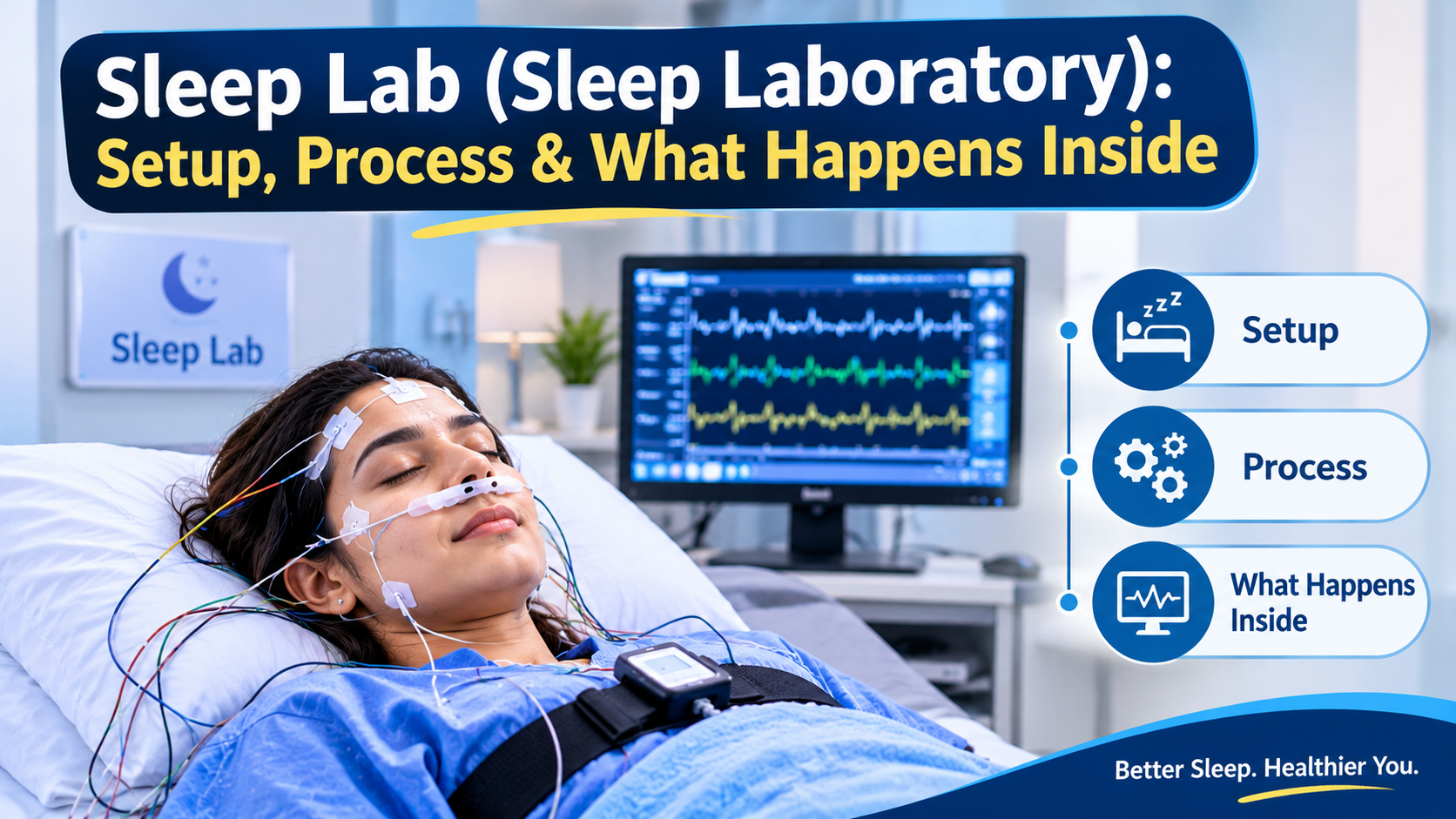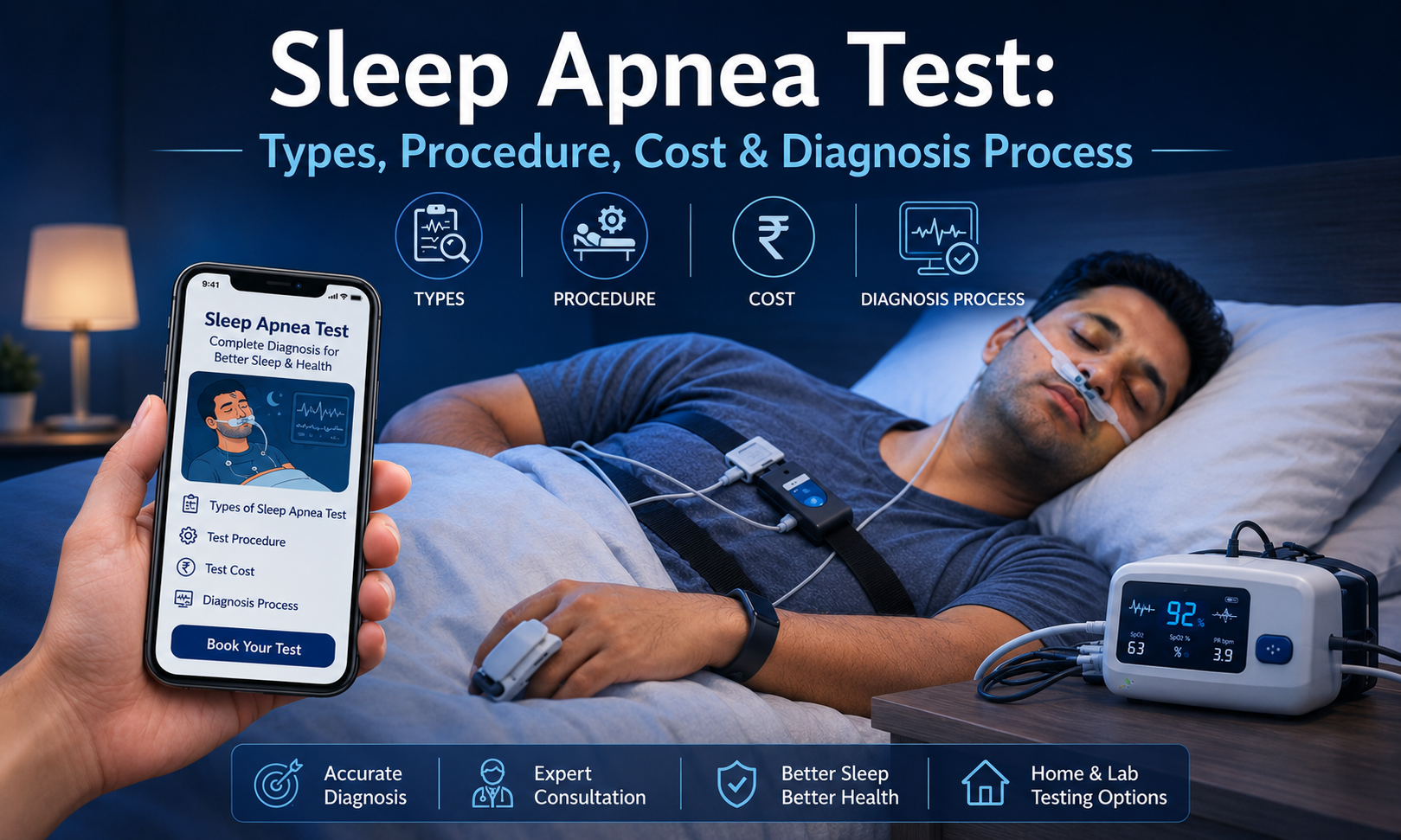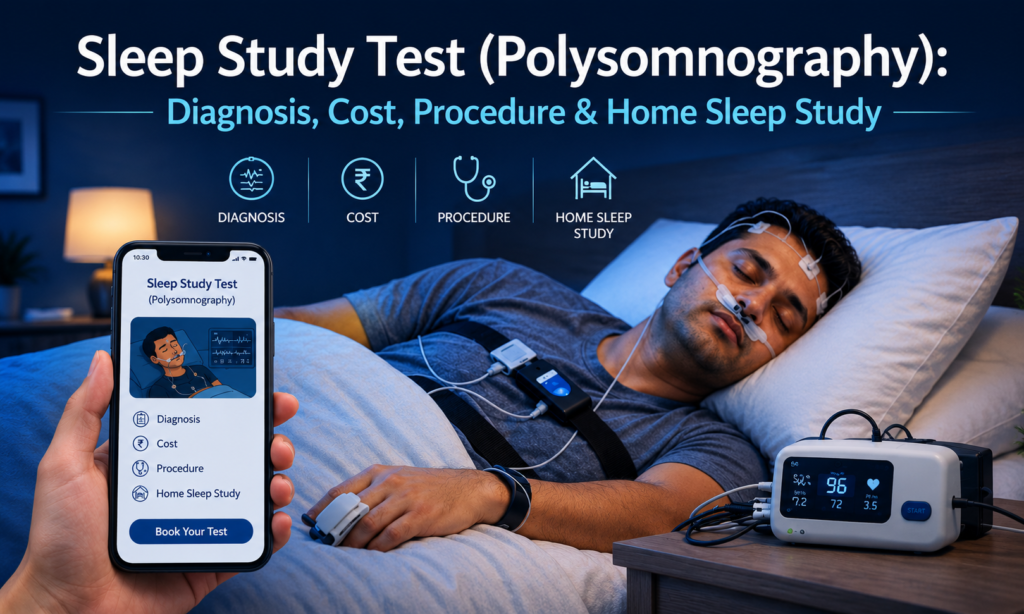
A sleep study is a medical test that records what happens in your body while you sleep. It helps doctors identify sleep disorders such as obstructive sleep apnea, abnormal breathing during sleep, unusual movements and certain sleep-related neurological conditions. The type of sleep study recommended depends on your symptoms and medical history.
A sleep study test may be performed overnight in a sleep laboratory or at home using portable monitoring equipment. A comprehensive test called polysomnography (PSG) records brain activity, eye movements, muscle activity, heart rate, breathing and blood oxygen levels. A home sleep apnea test usually measures fewer signals and is mainly used to evaluate suspected obstructive sleep apnea.
What Is a Sleep Study?
A sleep study, also called a sleep test or sleep analysis test, is a diagnostic investigation used to assess sleep patterns, breathing and other body functions during sleep.
The term polysomnography refers to a comprehensive sleep study that records several physiological signals simultaneously. The abbreviation for this test is PSG.
During the test, sensors collect information that helps a qualified healthcare professional determine whether your breathing is interrupted, your blood oxygen level falls, your sleep stages are disrupted or unusual movements occur during the night.
A sleep study may be recommended if you snore loudly, wake up gasping for air, feel excessively sleepy during the day or experience other symptoms that suggest a sleep disorder.
Sleep study meaning in simple words
The sleep study meaning is straightforward: it is a test that monitors your body while you sleep to help identify possible medical causes of sleep problems.
Unlike a standard blood test, a sleep study measures physiological signals over a period of sleep. The findings are interpreted alongside your symptoms and medical history.
What is polysomnography?
Polysomnography is a medical sleep test that records multiple body functions during sleep. It is commonly used to investigate sleep apnea and other conditions that require detailed information about sleep stages, breathing, brain activity or body movements.
The word combines poly, meaning many, somno, referring to sleep, and graphy, meaning recording.
A polysomnography test can be performed in a sleep laboratory. A suitable portable system can also record a comprehensive set of signals at home, depending on the test type and clinical requirements.
What Can a Sleep Study Diagnose?
A sleep study can help identify or investigate several sleep-related conditions. The conditions it can detect depend on the equipment used and the type of test prescribed.
- Obstructive sleep apnea (OSA): Repeated narrowing or blockage of the upper airway during sleep, which interrupts normal breathing.
- Central sleep apnea: Pauses in breathing associated with reduced or absent respiratory effort.
- Sleep-related breathing disorders: Abnormal breathing patterns or changes in oxygen levels during sleep.
- Periodic limb movements during sleep: Repetitive leg movements that may disrupt sleep.
- Certain parasomnias: Unusual behaviours or events during sleep, when the study captures the relevant episode.
- Narcolepsy evaluation: An overnight sleep study may be followed by a Multiple Sleep Latency Test (MSLT) when a doctor suspects narcolepsy or another cause of excessive daytime sleepiness.
- Other sleep disturbances: A comprehensive study may help investigate unexplained awakenings or abnormal sleep patterns.
A sleep study is not a universal test for every sleep problem. For example, insomnia is often assessed through a clinical history, sleep diary and other information. A home sleep apnea test is designed primarily to evaluate suspected obstructive sleep apnea and cannot diagnose every sleep disorder.
When should you consider a sleep disorder test?
A doctor may recommend a sleep disorder test if you experience one or more of these symptoms:
- Loud, habitual snoring.
- Gasping, choking or witnessed pauses in breathing during sleep.
- Persistent daytime sleepiness despite spending enough time in bed.
- Frequent nighttime awakenings or unrefreshing sleep.
- Unusual movements or behaviours during sleep.
- Difficulty staying alert during routine activities.
These symptoms do not automatically mean that you have a sleep disorder. A healthcare professional can assess your symptoms and determine whether testing is appropriate.
Types of Sleep Studies
Different sleep study types measure different aspects of sleep. Some provide a detailed record of brain activity and sleep stages, while others focus mainly on breathing and oxygen levels.
The appropriate test depends on the suspected condition, your medical history and whether the measurements required can be collected reliably at home.
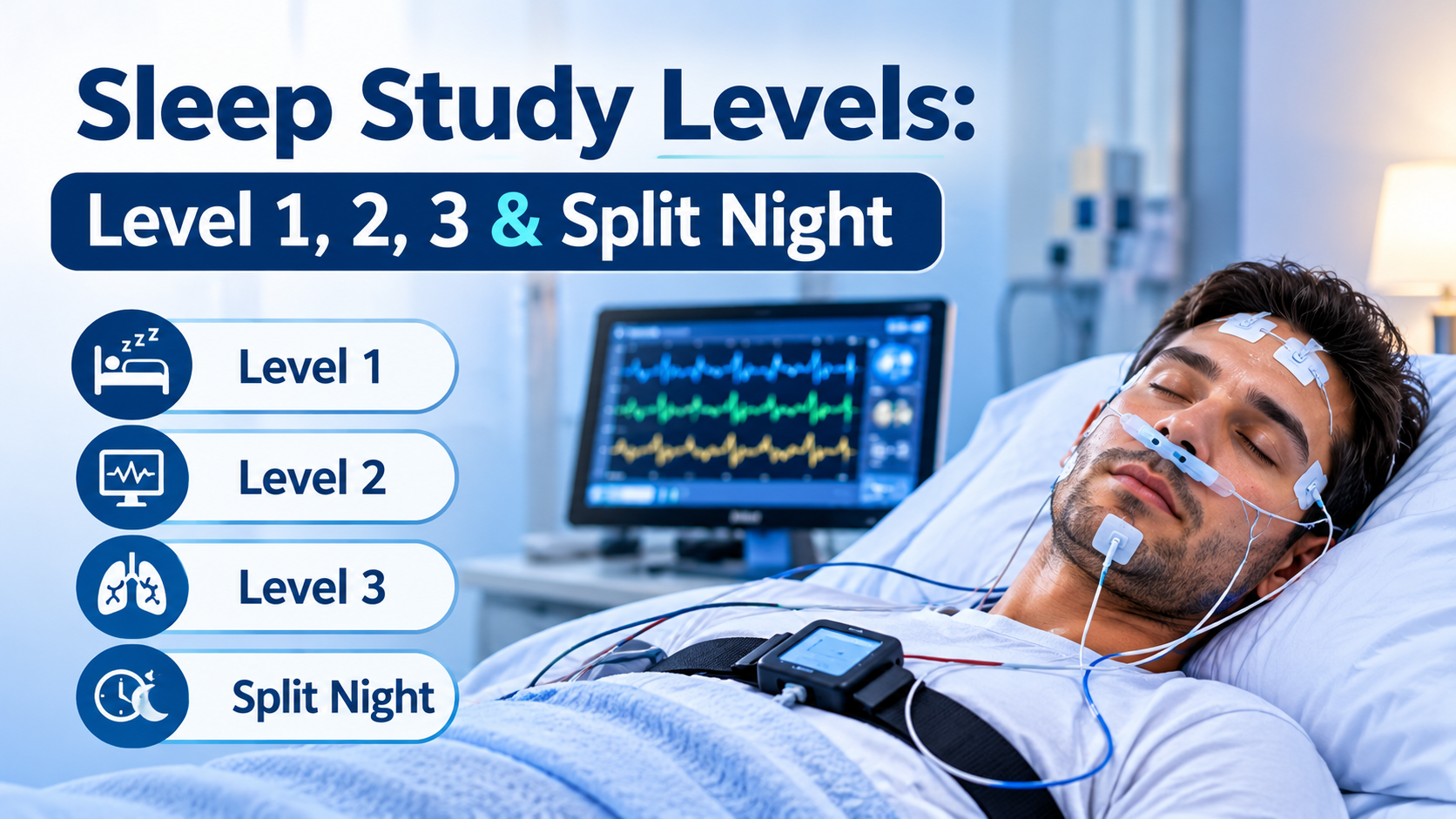
1. Level 1 sleep study: Attended polysomnography
A Level 1 sleep study is the traditional, comprehensive overnight polysomnography test performed in a sleep laboratory with a technician monitoring the recording.
It typically measures brain waves, eye movements, muscle activity, heart rate, airflow, respiratory effort and blood oxygen saturation. Video and audio may also be recorded.
This type of sleep study is useful when a detailed assessment is required, including sleep staging or investigation of conditions beyond uncomplicated obstructive sleep apnea.
2. Level 2 sleep study: Unattended comprehensive PSG
A Level 2 sleep study generally refers to an unattended comprehensive polysomnography test that records the same broad range of physiological signals as a traditional laboratory PSG.
Because it is portable and unattended, it may be performed at home when the equipment and clinical circumstances are suitable. It can provide information about sleep stages as well as breathing, oxygen levels, heart activity and movements.
This makes Level 2 testing different from a limited home sleep apnea test. However, the exact signals available depend on the device and testing protocol.
If you are considering a Level 2 sleep study at home, confirm which measurements are recorded and who will interpret the results.
3. Level 3 sleep study: Home sleep apnea testing
A Level 3 sleep study typically uses portable equipment to record a limited set of cardiorespiratory signals. These commonly include airflow, respiratory effort, blood oxygen saturation and heart rate.
It is often used to assess adults with a clinical suspicion of obstructive sleep apnea when a healthcare professional considers home testing appropriate.
Unlike comprehensive polysomnography, a typical Level 3 test does not directly measure brain waves and therefore cannot determine sleep stages in the same way.
A negative or inconclusive home test does not always rule out sleep apnea. If symptoms and clinical suspicion remain, a doctor may recommend an in-laboratory polysomnography test or further evaluation.
4. Level 4 sleep study: Limited-channel monitoring
A Level 4 sleep study traditionally refers to a device that records only one or two physiological signals, such as oxygen saturation or airflow.
Because fewer measurements are collected, the test has important limitations. A single oxygen reading or limited recording should not automatically be treated as a complete diagnosis of sleep apnea.
The suitability of limited-channel testing depends on the clinical question and the device used. Test classifications can vary, so the actual measurements matter more than the level label alone.
Sleep Study Levels: Comparison
| Feature | Level 1 | Level 2 | Level 3 | Level 4 |
| Typical setting | Sleep laboratory | Home or other suitable setting | Usually home | Home or other setting |
| Technician present overnight | Yes | Usually no | Usually no | Usually no |
| Brain activity and sleep stages | Yes | Generally yes | Usually no | No |
| Breathing and oxygen monitoring | Yes | Yes | Yes | Limited, device-dependent |
| Main use | Comprehensive sleep assessment | Comprehensive portable assessment | Suspected sleep apnea | Limited physiological monitoring |
Note: These are traditional classifications. Available sensors, recording methods and clinical indications vary by device and provider. A clinician should select the test based on the information needed to answer the diagnostic question.
What Is the Difference Between a Sleep Study and a Sleep Apnea Test?
A sleep study is a broad term for tests that assess different aspects of sleep. A sleep apnea test is specifically intended to investigate breathing interruptions associated with sleep apnea.
A comprehensive polysomnography test can assess sleep stages, brain activity, breathing, oxygen levels and movements. A typical home sleep apnea test records fewer signals and focuses on respiratory events.
The terms sleep test, sleep apnea test and sleep study test are sometimes used interchangeably, but they do not always describe the same procedure. If your doctor suspects a condition other than uncomplicated obstructive sleep apnea, a limited home test may not provide enough information.
What Does a Sleep Study Test Measure?
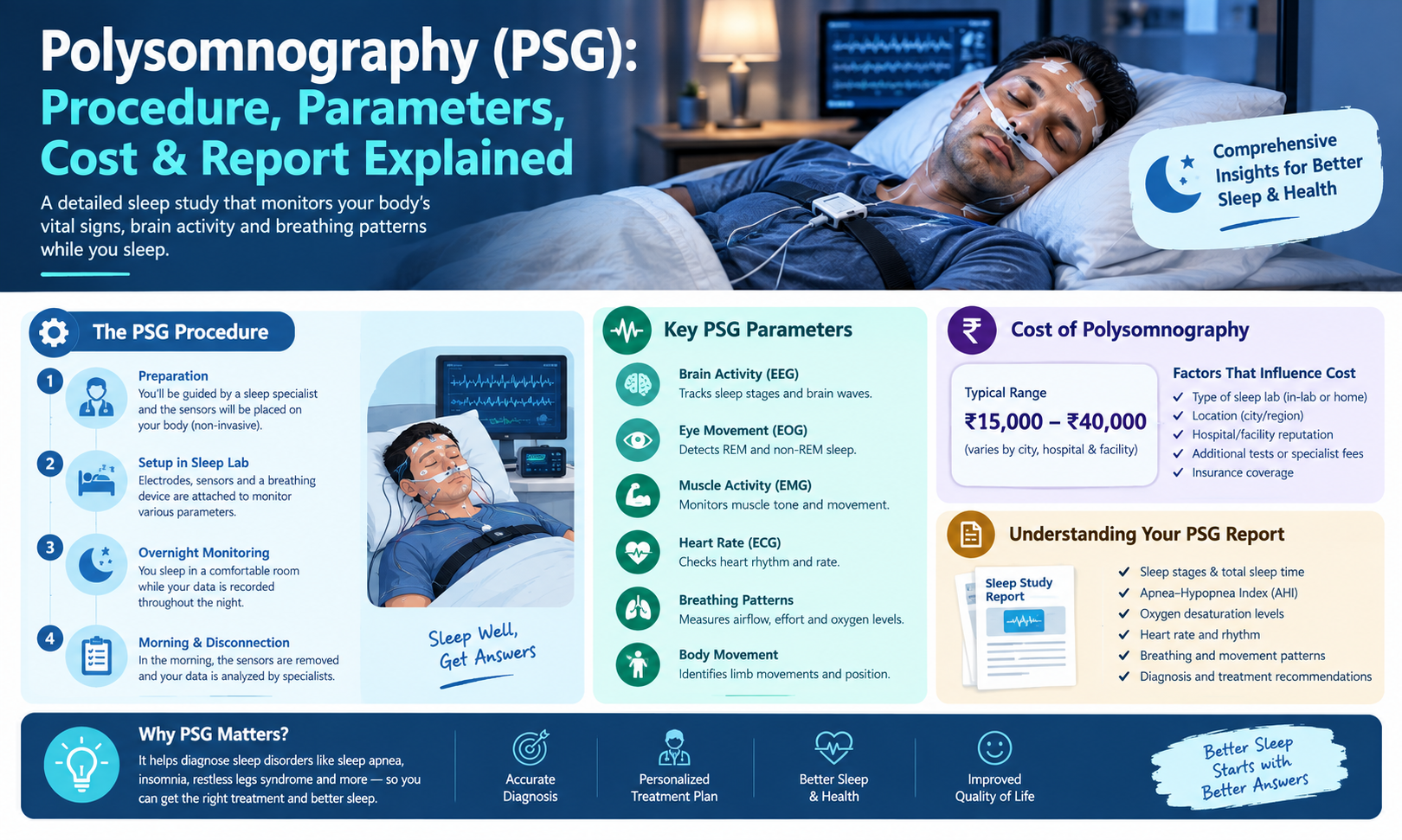
The measurements depend on the type of sleep study. During comprehensive polysomnography, sensors can record several physiological functions.
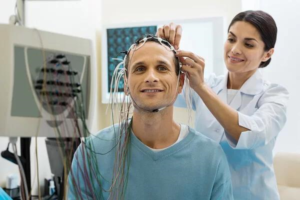
Brain waves (EEG)
Record electrical activity in the brain to help identify sleep stages and brief awakenings.
Blood oxygen saturation
Measures oxygen levels in the blood and helps identify drops that may accompany breathing problems.
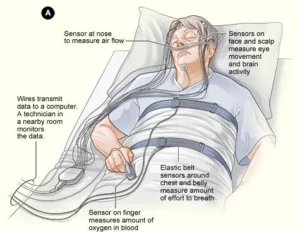
Breathing and airflow
Help identify pauses in breathing, reduced airflow and changes in respiratory effort.
Heart rate and rhythm
Record cardiac activity during the study, depending on the sensors used.
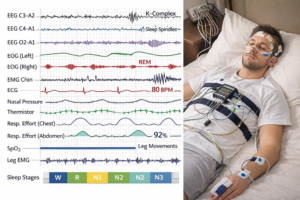
Eye and muscle movements
Help assess REM sleep, muscle activity and certain sleep-related movement disorders.
A comprehensive study can also record snoring, body position and video or audio. A home sleep apnea device may record only a subset of these signals.
How Does a Sleep Study Test Work?
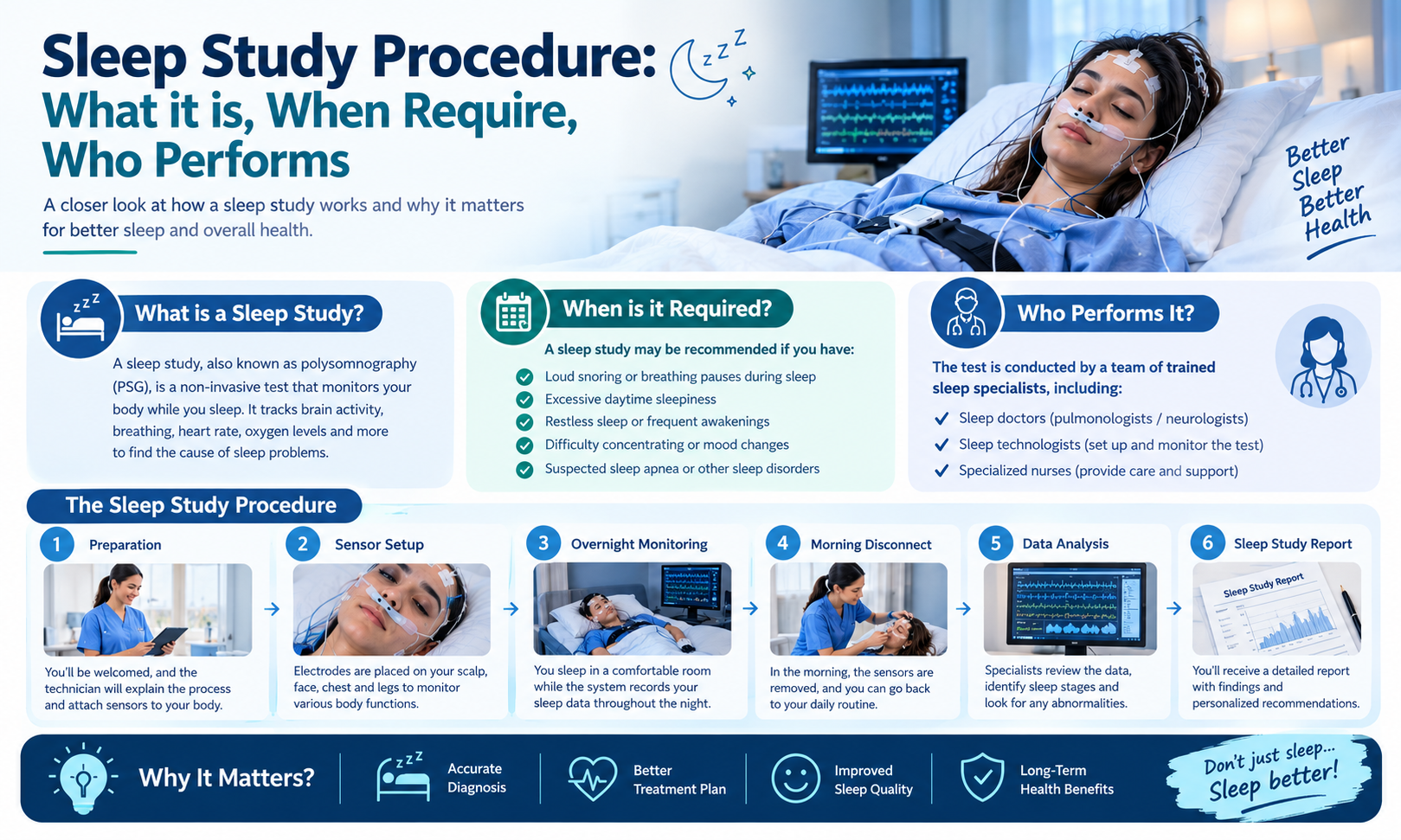
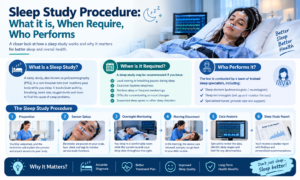
The sleep study test procedure involves preparing for the recording, attaching sensors, sleeping while the device collects data, and having the results reviewed by a qualified professional.
The exact steps depend on whether you undergo polysomnography in a sleep laboratory or a home sleep study.
Step 1: Medical assessment
Your healthcare professional reviews your symptoms, medical history, medications and sleep habits. They use this information to decide which type of sleep study is appropriate.
Step 2: Preparing for the test
You may be asked to follow your usual sleep schedule, avoid afternoon naps and avoid alcohol or caffeine during the period specified by your provider. Ask about any medication instructions before changing your routine or stopping a prescribed medicine.
For a home test, you will receive the equipment and instructions for attaching the sensors correctly.
Step 3: Attaching the sensors
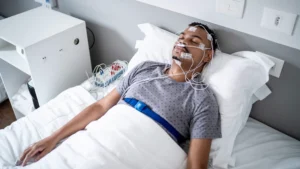
For comprehensive polysomnography, a technician attaches sensors to selected areas of your scalp, face, chest and legs. A finger or ear sensor measures blood oxygen saturation.
For a home sleep apnea test, the equipment is usually simpler. It may include a breathing sensor, chest or abdominal belts, and a pulse oximeter.
Step 4: Recording during sleep
You sleep while the equipment records the signals needed for your test. In a sleep laboratory, a technician monitors the recording remotely and can help if a sensor becomes detached or you need assistance.
At home, you generally follow the device instructions and sleep in your usual environment.
Step 5: Reviewing the sleep analysis
After the test, the recording is checked for signal quality and interpreted in the context of your symptoms. A qualified healthcare professional reviews the findings and explains whether further assessment or treatment is needed.
Also Check: Sleep Study Cost
What Is a Sleep Study Room Like?
A sleep study room in a sleep laboratory is usually arranged to resemble a quiet bedroom. It may contain a bed, monitoring equipment, a camera and an audio system that allows the technician to communicate with you.
Sensors are attached before you go to sleep, and their wires are arranged to allow normal movement in bed. You can generally wear your usual nightclothes and follow your normal bedtime routine, subject to the laboratory’s instructions.
If you have a home sleep study, you use the equipment in your own bedroom. This may feel more familiar, but the test still needs to be performed correctly for the recording to be useful.
What Is a Sleep Study Machine?
A sleep study machine is a monitoring device that records physiological signals during sleep. Its design depends on the type of study being performed.
A comprehensive polysomnography system may connect multiple sensors to a recording unit or computer. A portable sleep test machine may be smaller and designed for use at home.
Common components include:
- Airflow sensors: Measure air moving through the nose or mouth.
- Respiratory effort belts: Detect chest or abdominal movements during breathing.
- Pulse oximeter: Measures blood oxygen saturation and pulse rate.
- EEG electrodes: Record brain activity during comprehensive studies.
- ECG or heart-rate sensors: Record cardiac activity.
- Movement sensors: Measure selected muscle activity, limb movements or body position.
Not every sleep study machine includes all these components. Before choosing a test, check which signals the device records and whether it is suitable for your suspected condition.
How to Prepare for a Sleep Study
Following the instructions from your sleep clinic or healthcare professional can help reduce problems with the recording.
Before your sleep study test:
- Maintain your usual sleep schedule unless your provider gives different instructions.
- Avoid alcohol and follow the provider’s guidance about caffeine.
- Do not apply lotions, oils or other products to areas where sensors will be attached if they could interfere with the electrodes.
- Ask whether you should take your usual medications.
- Bring comfortable nightclothes and any permitted items you normally use at bedtime.
- For home testing, read the instructions and confirm how to attach the sensors and operate the device.
You do not usually need to force yourself to stay awake or try to sleep more than usual before the test. Follow the specific preparation instructions provided for your study.
Is a Sleep Study Painful? Are There Any Risks?
A sleep study is generally non-invasive and painless. Sensors are attached to the skin, and most people can move around in bed within the limits of the equipment.
Some people experience minor skin irritation from adhesive electrodes. Sleeping in an unfamiliar room or wearing sensors may also make it harder to fall asleep.
Serious complications are uncommon. If you have a known skin sensitivity or concerns about the equipment, tell the technician or healthcare professional before the test.
Sleep Study Test Results: What Do They Mean?
Your sleep study test results show what happened during the recording. The interpretation depends on the type of test, the quality of the data and your symptoms.
A comprehensive polysomnography report may include sleep stages, breathing events, oxygen levels, heart rate, limb movements and the frequency of brief awakenings. A home sleep apnea test report generally focuses more narrowly on breathing and oxygen-related measurements.
What is the AHI in a sleep study report?
The apnea-hypopnea index (AHI) measures the average number of apneas and hypopneas per hour of sleep during a study that measures sleep time.
For adults, the following ranges are commonly used to classify obstructive sleep apnea severity:
| AHI per hour | Common interpretation |
| Below 5 | Below the usual threshold for OSA by AHI |
| 5 to less than 15 | Mild OSA |
| 15 to less than 30 | Moderate OSA |
| 30 or higher | Severe OSA |
These thresholds are interpreted alongside symptoms, medical history and other findings. A home test may report a respiratory event index (REI) based on monitoring time rather than measured sleep time, so its figures are not always directly equivalent to an AHI from polysomnography.
How is polysomnography interpreted?
Polysomnography interpretation involves reviewing the recorded signals to identify sleep stages, breathing abnormalities, oxygen changes, heart activity and other relevant events.
A healthcare professional considers the findings alongside the reason for testing. An isolated measurement should not be used to diagnose a condition without appropriate clinical interpretation.
If a home sleep test is negative or inconclusive despite persistent symptoms, additional evaluation or an in-laboratory study may be recommended.
When will I receive my sleep study report?
The time required to receive a sleep study report varies by provider and test type. The recording may need to be checked, scored and interpreted before the final report is available.
Ask your provider when to expect the report and arrange a follow-up appointment to discuss the findings. Avoid starting treatment or changing a prescribed device setting based solely on an automatically generated report.
What Happens After a Sleep Study?
After an overnight laboratory study, the sensors are removed and you can generally return home. After a home sleep test, you remove the sensors and return or dispose of the equipment according to the provider’s instructions.
Your healthcare professional will explain the results and discuss the next steps. Depending on the findings, these may include further testing, lifestyle changes, treatment for a diagnosed sleep disorder or positive airway pressure therapy such as CPAP.
If the study does not explain your symptoms, your provider may recommend another type of assessment.
Home Sleep Study vs Sleep Laboratory Test
Choosing between a home sleep study and a laboratory test depends on the suspected condition and the level of detail required.
| Comparison | Home sleep study | Laboratory polysomnography |
| Where it takes place | At home | Sleep laboratory |
| Usual purpose | Assess suspected obstructive sleep apnea | Comprehensive sleep assessment |
| Monitoring | Depends on the portable device | Multiple physiological signals |
| Sleep-stage measurement | Usually unavailable in a typical Level 3 test, possible with comprehensive portable PSG | Yes |
| Technician monitoring | Usually unattended | Technician monitors the recording |
| Main limitation | May not assess other sleep disorders adequately | Requires an overnight visit to a sleep facility |
A home sleep study can be a convenient option for appropriately selected patients, but it is not suitable for everyone. A healthcare professional should decide which test is appropriate, especially when other medical conditions or sleep disorders are suspected.
BreatheNest for Sleep Study in Delhi NCR
BreatheNest offers professional sleep study services in Delhi NCR. We offer –
- Level 2 Sleep Study or Polysomnography from German Sleep Study Equipment
- Level 3 Sleep Study from Australian sleep study machine
- Split Night Sleep Study (Diagnosis with pressure titration)
- Fresh accessories for every test
- Trained and professional technician for sleep study
- Signed sleep study report by a qualified RPSGT
- Easy to interpret sleep study results
- Reporting within 6-12 Hrs of sleep study
- Competent pricing for Level 3 Sleep Test and Level 2 Sleep Study
- Assistance for the entire journey from Sleep Study to treatment options based on the requirement of the patient.
Frequently Asked Questions About Sleep Studies
1. What is a sleep study test used for?
A sleep study test records body functions during sleep to help diagnose or investigate sleep disorders. Depending on the test, it may identify obstructive sleep apnea, abnormal breathing, oxygen drops, unusual movements and disrupted sleep stages. The type of study required depends on your symptoms and the condition being investigated.
2. What is the difference between a PSG test and a home sleep test?
A PSG test, or polysomnography, typically records several signals, including brain activity, eye movements, muscle activity, breathing, heart rate and oxygen saturation. A typical home sleep apnea test measures fewer signals and focuses on breathing-related problems. Some comprehensive portable systems can record sleep stages at home.
3. What can a sleep study diagnose?
A sleep study can help diagnose obstructive sleep apnea and other sleep-related breathing disorders. Depending on the measurements recorded, it may also help investigate periodic limb movements, certain unusual sleep behaviours and conditions involving disrupted sleep stages. Narcolepsy evaluation may require an additional daytime test after overnight polysomnography.
4. How long does a sleep study take?
An overnight sleep study usually requires several hours of recording, often around six to eight hours in a sleep laboratory. The total visit may be longer because of arrival, sensor placement and preparation. Home testing is performed according to the device instructions and the duration prescribed by the provider.
5. Are sleep study results accurate?
Sleep study results can provide valuable diagnostic information when the appropriate test is performed and the recording is technically adequate. Accuracy depends on the device, the signals collected, recording quality and clinical interpretation. A negative or inconclusive home sleep apnea test may need follow-up if symptoms continue.