Quick Answer
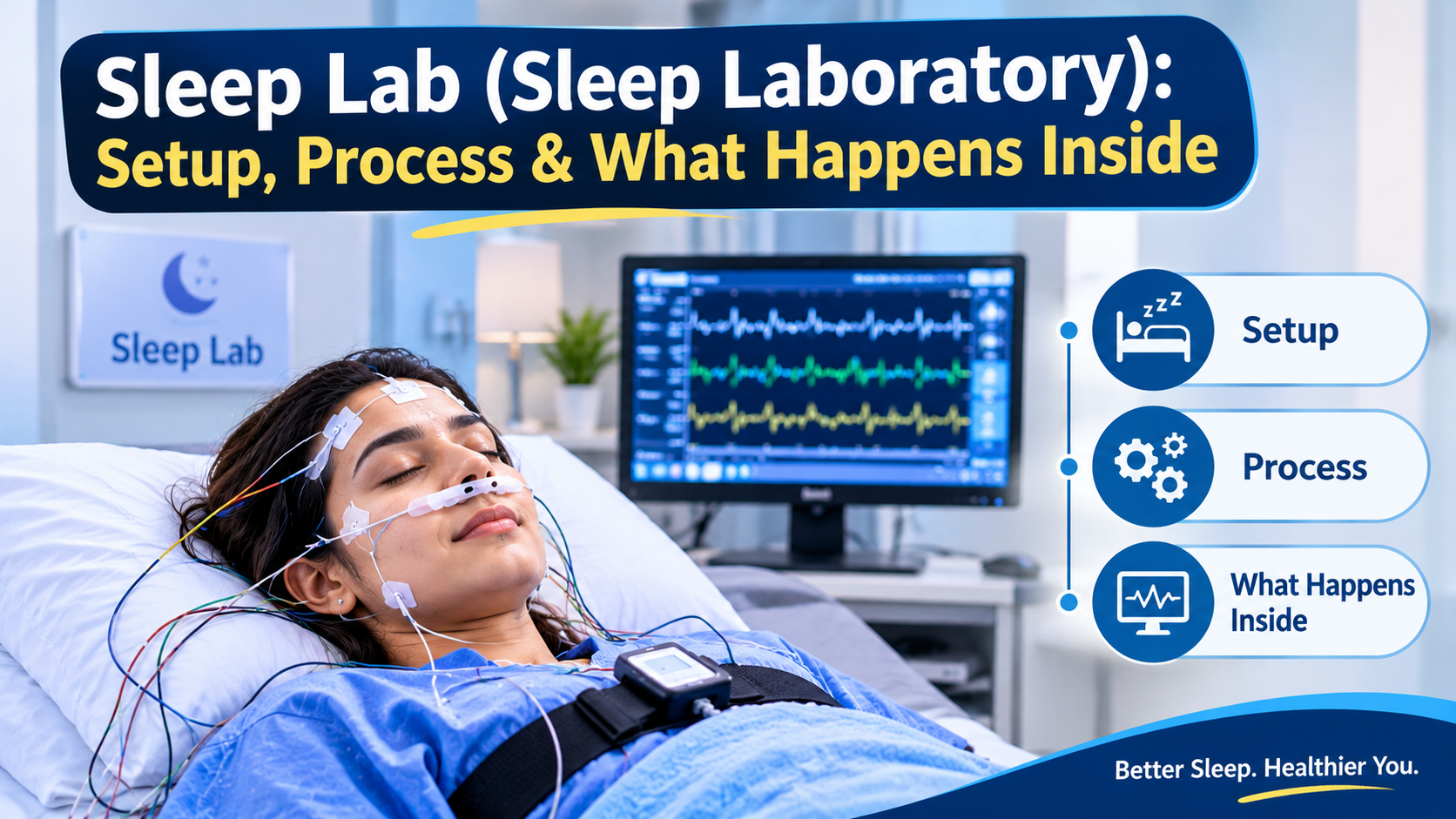
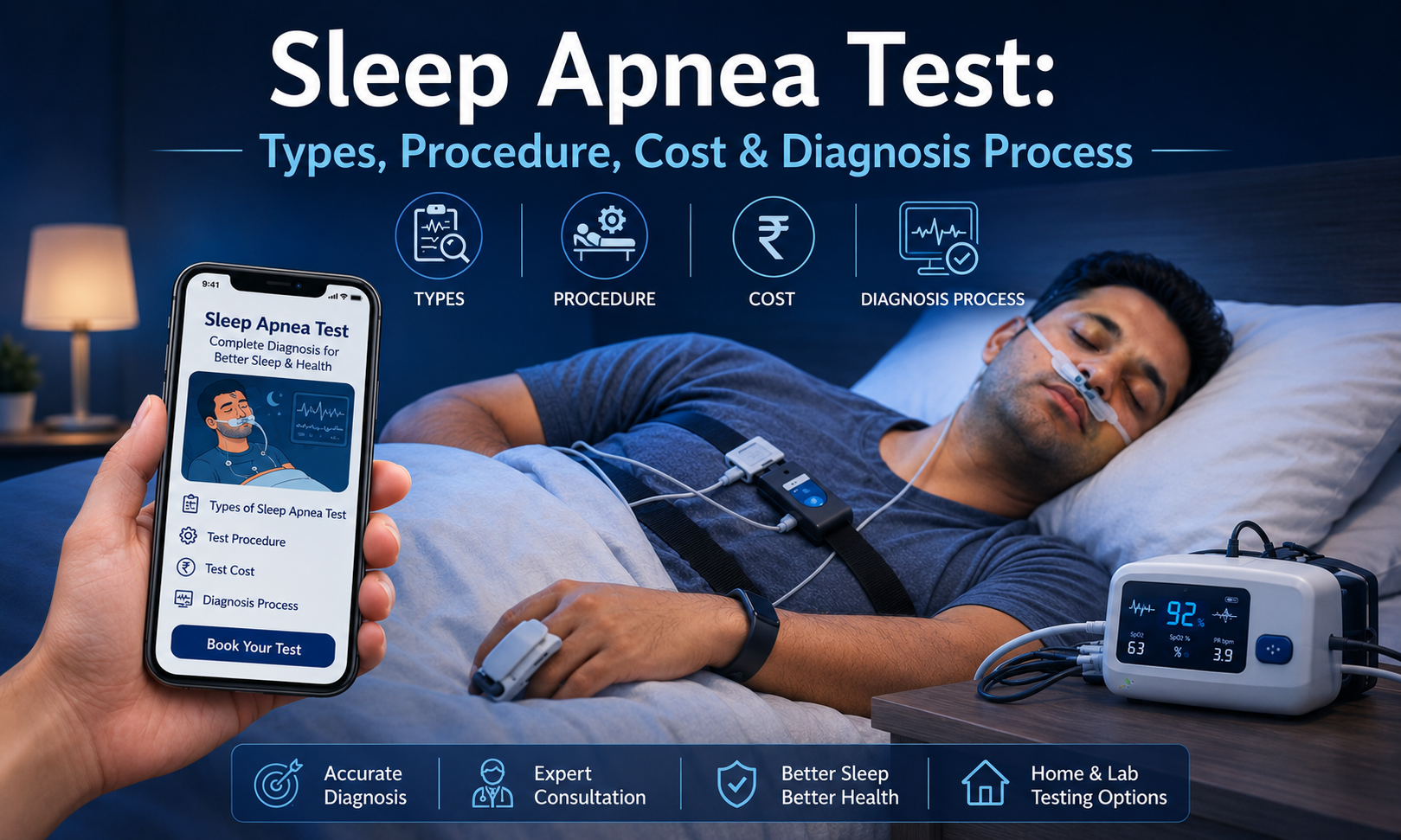
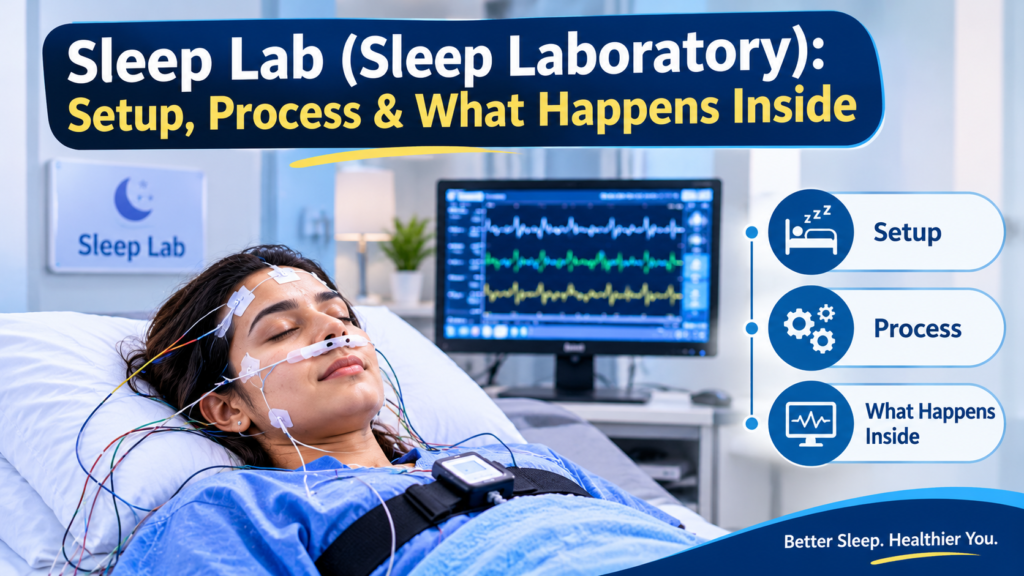
A Sleep Lab is a medical facility specially designed to evaluate sleep disorders and conduct overnight testing. The most common testing procedure here is polysomnography. It helps record your brain waves, heart rate, and oxygen levels while you are asleep.
A sleep lab might be located within a hospital or a dedicated sleep center. You will be spending your night in a private room with sensors on your body tracking different metrics of your body. It does not involve needles or pain but runs through your body with so many wires.
Quick Overview Table
| Sleep Lab Component / Process | What Happens? | Why Is It Important? |
|---|---|---|
| Patient Sleep Room | A private, quiet and comfortable bedroom with a bed, suitable lighting and temperature control. | Helps patients sleep in a comfortable environment during testing. |
| Sleep Monitoring System | Records brain waves, eye movements, muscle activity, heart rate and other physiological signals. | Helps specialists evaluate sleep stages and identify sleep abnormalities. |
| Monitoring Sensors | Small electrodes and sensors are attached to the scalp, face, chest, abdomen and legs. | Tracks sleep patterns, breathing, body movements and oxygen levels. |
| Breathing Monitoring Equipment | Airflow sensors, respiratory effort belts and oxygen saturation monitors are used. | Helps detect breathing interruptions and signs of sleep apnea. |
| Audio-Visual Monitoring | Cameras and two-way audio systems allow technicians to observe and communicate with patients. | Helps monitor patient movements and address any assistance required during testing. |
| Technician Control Room | Sleep technicians monitor live recordings and equipment from a separate room. | Ensures the recording process is monitored and technical issues can be addressed. |
| Sleep Data Analysis & Reporting | Recorded signals are reviewed and interpreted by a qualified sleep specialist. | Helps identify sleep disorders and determine appropriate treatment recommendations. |
Note: The exact setup and equipment may vary depending on the sleep laboratory, type of sleep study and patient’s diagnostic requirements.
What Is a Sleep Lab?
The sleep lab is the place where sleep studies are performed in an environment in which everything can be controlled and monitored. The sleep lab is the place where the professionals responsible for performing the sleep study will monitor and document your physiological activities while you sleep.
Your local sleep labs may be located at a hospital, respiratory clinic, or a specialized sleep center. Services and types of equipment available to you will vary based on what services they offer, as well as their individual setup.
Typical Polysomnography (PSC) Lab Setup:
- Patient Room: This is usually where you will spend the night being monitored.
- Sensors: These sensors will record various bodily functions throughout your sleep.
- Recording Equipment: The recording equipment will record your physiological signals and transmit them back to the monitoring station.
- Monitoring Station: This is where the technician will review the signal strength/quality of the recordings.
- Technician Assistance: Your technician will provide assistance with all technical aspects of the sleep study.
- Analysis & Reporting: Your technician will analyse the data and generate a report based on your reports coming out after your sleep study.
Sleep Study Room: How Does It Look Inside?
Most of the sleep study rooms are organised like a comfortable place with all required equipment and arrangements to help you get comfortable and relax.
- The Bedroom: You will get a private space that is quiet and dark. It will have your bed, pillows, and climate control options to help you relax and sleep.
- The Sensors and Equipment: You will see the sensors and equipment in a box. There will be lengthy wires, connecting tapes, and other medical instruments that might be required during the study test.
- Monitoring Setup: Intercoms and communication technologies are set up so that any kind of supervision can be provided without any interruption during sleep.
Preparations Before You Get to Sleep
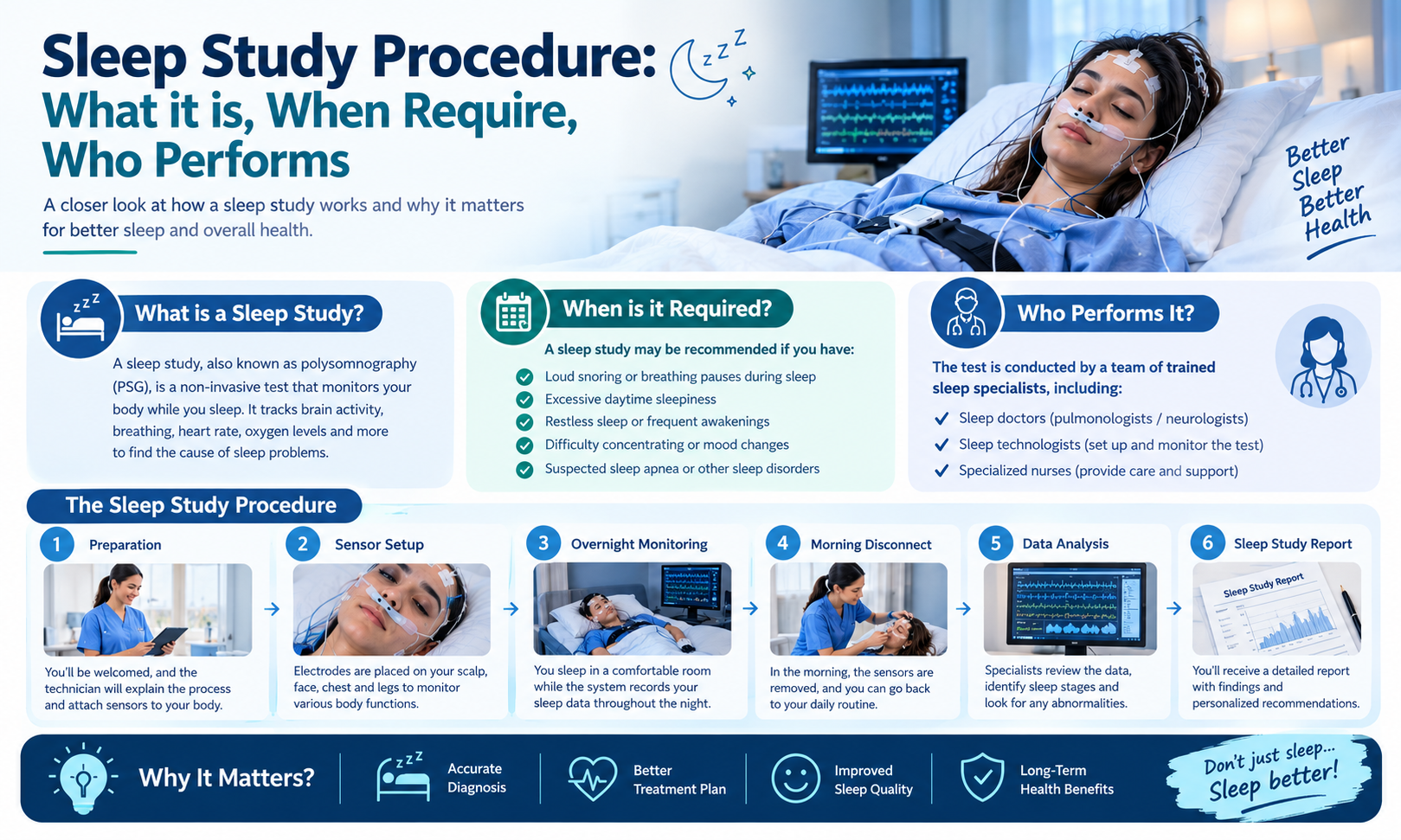
The following process takes place when you reach the premises.
- Arrival and Setup: You have to reach the facility at least an hour before the allotted time or your bedtime. You have to settle in and get into your nightclothes.
- Sensor Placement: Now an expert will help you with placing sensors on your body, chest, face, and legs. Do not worry, it won’t hurt. You will just know they are there. Be patient! Healthcare experts should advise you on all precautions ahead.
- Equipment Check: Your healthcare expert will ensure that all major functionalities, including the breathing signals, moving legs, and everything else, are working properly.
- Final Check: You are instructed on how to call technical assistance if you need to go to the bathroom or need assistance with any of your issues midway.
What Happens During Sleeping?
Monitoring starts when you go to sleep. Let us check the exact activities.
- Overnight Sleep Monitoring: You will be under the supervision of an expert who will watch the data and video feed from another room without any interruption.
- Sleep Staging: Your brainwaves patterns get monitored in real time to lock in each stage.
- Breathing: Your airflow, oxygen levels, and chest movement are recorded to help understand any pause in breathing.
- Morning Wrap Up: Sensors are taken off your body in the morning before you are allowed to leave.
Wrapping Up In the Morning
- You will wake up in the early hours with a minimum of 7-8 hours of sleep.
- Healthcare experts will be helping you to get the sensors removed.
- You can leave for your home/hospital room.
Waiting for the Report
The data fetched from the sensors are analyzed and incorporated into the study report. The report is reviewed by the qualified expert personnel. They explain the findings and any follow-ups to give.
- Your data and readings are submitted.
- An expert will analyze the collected data.
- You will be given a date to come and collect the report.
- You can discuss the report and ask for any clearance you might need.
How Is a Sleep Lab Setup?
A sleep laboratory is composed of an area that has both the necessary recording equipment and a space where patients can sleep.
The specific layout will depend upon the number of rooms within the facility, the variety of studies performed by the facility, and what kind of equipment the facility has.
1. Patient Sleeping Area
The patient sleeping area has the bed, along with all other necessary equipment for the particular study that has been ordered. It is possible that the patient could have some sensors attached prior to going to bed.
Then, those signals would be transmitted via either cable or wirelessly to the recording device. Patient comfort while they are sleeping includes lighting, room temperature, and how comfortable it is. There may also be procedures or guidelines from the facility regarding time of bedtime, preparation, and potential safety concerns related to the equipment.
2. Monitoring Section
This section of the sleep laboratory is used by sleep technicians to view and inspect the technical data recorded by the sleep study. Based on the system used, this could potentially show multiple different signals at one time.
When using this type of system, there is a possibility for the technician to monitor the quality of each of the various signals. In addition, the technician will determine if any sensors are functioning properly or if there are any other types of technical problems occurring during the study.
Additionally, communication systems are available so that the patient can call for help if there are any problems.
3. Equipment Used During a Sleep Study
Depending upon what type of sleep study is being performed, different types of equipment may be used.
For example, a complete polysomnographic study may require one or more of the following:
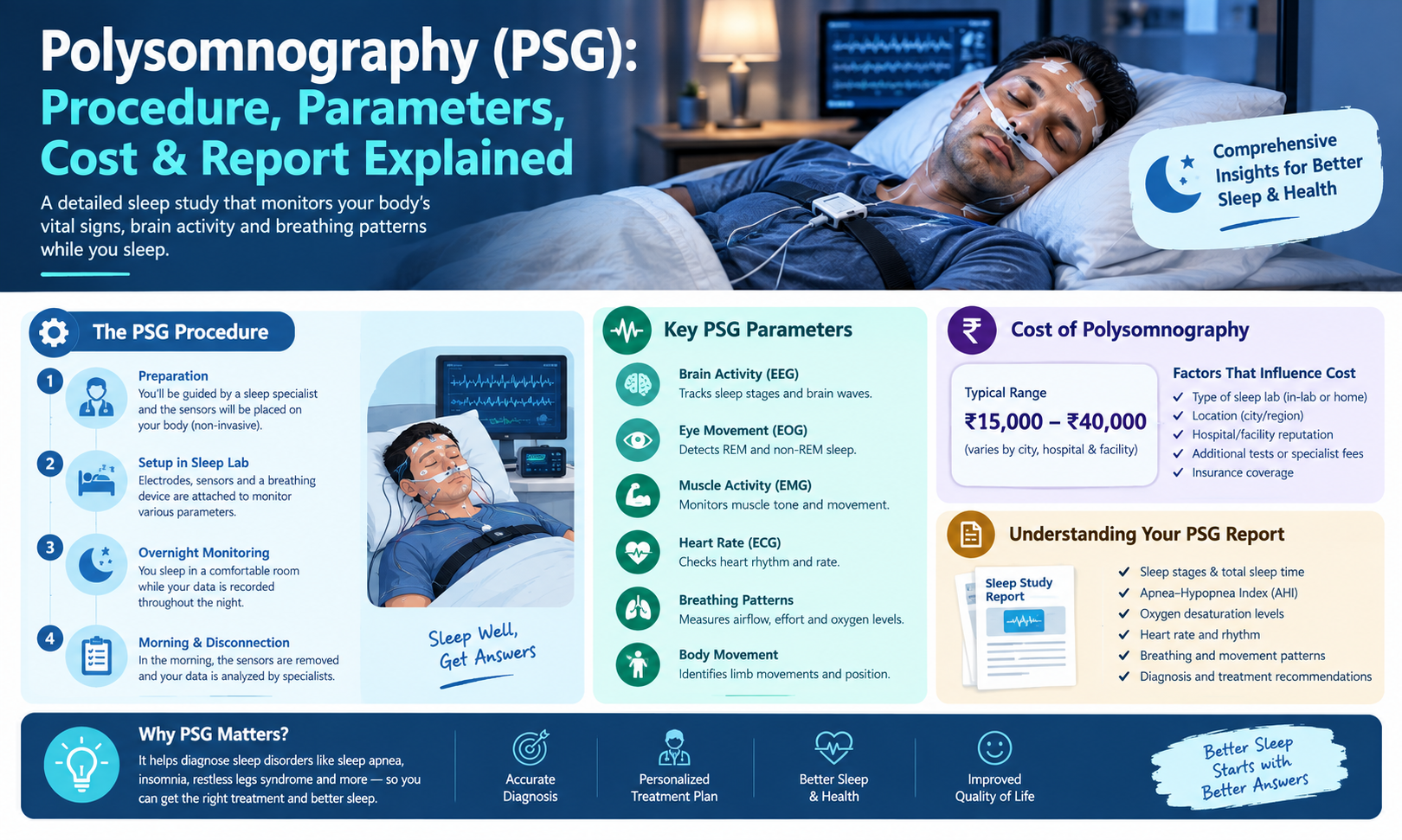
- Electroencephalogram (EEG): This device measures electrical activity in the brain and is helpful in determining sleep stage.
- Electrooculogram (EOG): This measures eye movements and is useful in identifying sleep stages.
- Electromyogram (EMG): This is used to record muscle activity.
- Electrocardiogram (ECG): This device helps with recording electrical activity in the heart.
- Pulse Oximetry: This device measures blood oxygen levels.
- Respiratory sensors: These devices help in recording breathing patterns and respiratory effort based on the type of study.
- Leg movement sensors: These measure leg movements during periods of sleep.
- Video/Audio: This is sometimes used to capture video or audio recordings of body movements, sounds, etc., as required.
At one time, there will only be a single piece of equipment being used. However, the pieces of equipment depend on the nature of the clinical questions being asked and which type of test is being done.
What Does a Sleep Technologist Do?
A sleep technologist supports the technical process of recording a sleep study. There are some major activities that a sleep technologist would do:
- They prepare the sleep room and equipment.
- They explain the testing process to the patient.
- They help you apply the required sensors.
- They check whether the signals are recording correctly.
- They help you monitor the study and address technical issues.
- They help the patient with equipment-related concerns.
- They remove sensors after the recording is complete.
The technologist’s role is important because reliable recordings help the clinical team assess the study.
Who Interprets Sleep Study Results?
The sleep technologist and the clinician have different responsibilities. The technologist handles the technical aspects of the recording and helps ensure that usable data are collected. A qualified clinician reviews and interprets the findings in the context of the patient’s symptoms and medical history.
A diagnosis should not be based on the presence of monitoring equipment or on an unreviewed recording alone. Patients should discuss their report and next steps with the clinician responsible for their care.
What Should You Bring to the Sleep Lab?
You must follow the instructions given by the facility where your test is to be conducted. You might be asked to bring the following.
- Comfortable nightwear.
- Toiletries and personal essentials.
- Your prescription or referral (if any).
- Relevant medical information and previous sleep-study reports.
- A list of medicines you take.
- Any other items specifically requested by the facility.
Also, consult the supervisor or follow up on any special instructions about caffeine, naps, hair products or regular medication. Do not stop or change prescribed medication unless your treating clinician advises you to do so.
FREQUENTLY ASKED QUESTIONS (FAQs)
Q1. Is the Sleep Lab Test painful?
Ans: No, a sleep test is not painful at all. The process includes no needles or surgical tools to set up the sensors in your body.
Q2. What is the cost of a sleep study test?
Ans: The cost of a sleep study test depends on whether you are choosing an in-lab polysomnography test or Polysomnography test at home. The in-lab test might be in the range of ₹12,000 to ₹35,000 and a home based Polysomnography sleep study might cost ₹ 7500 to ₹10,000.
Q3. How many hours is a sleep test?
Ans: A complete overnight sleep test lasts for 8 to 9 hours in a clinic or 6 to 8 hours when done at home. This includes attaching sensors and getting the results.
Q4. Can I sleep on my side during an in-lab sleep study?
Ans: Yes, you can sleep on any of your side during the in-lab sleep study. The sensors are properly attached to your body in a way that allows comfortable movement throughout the night.