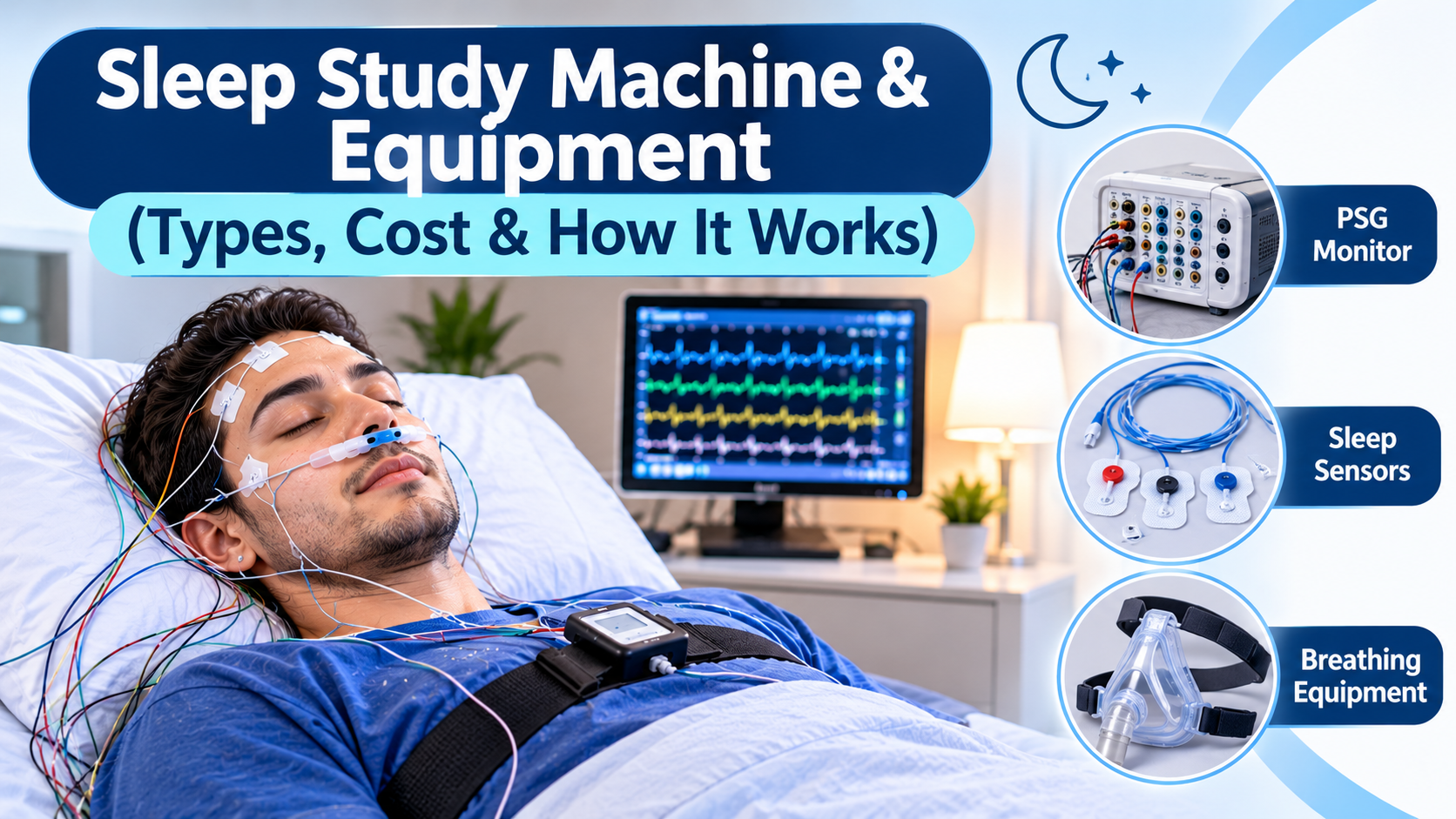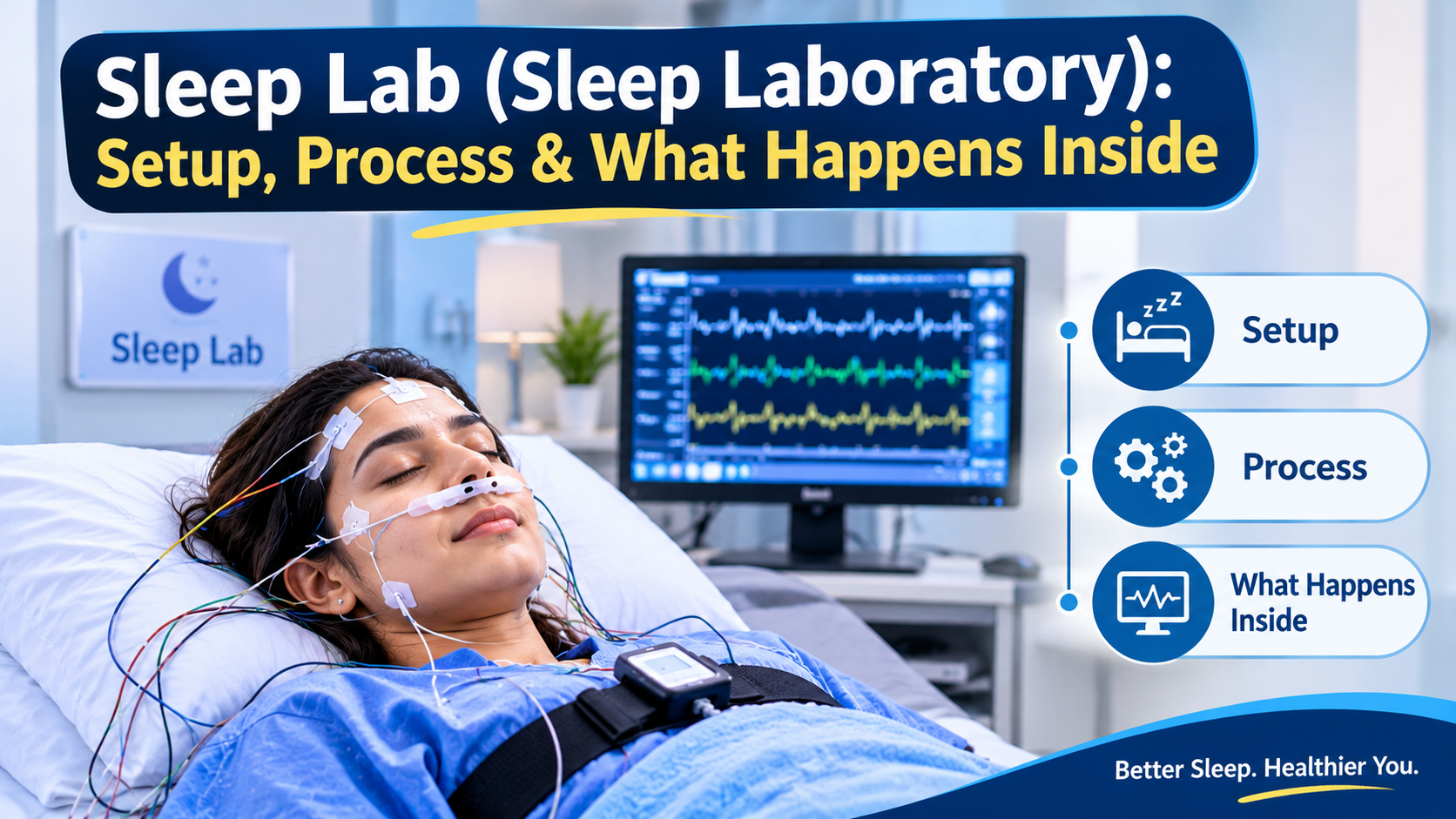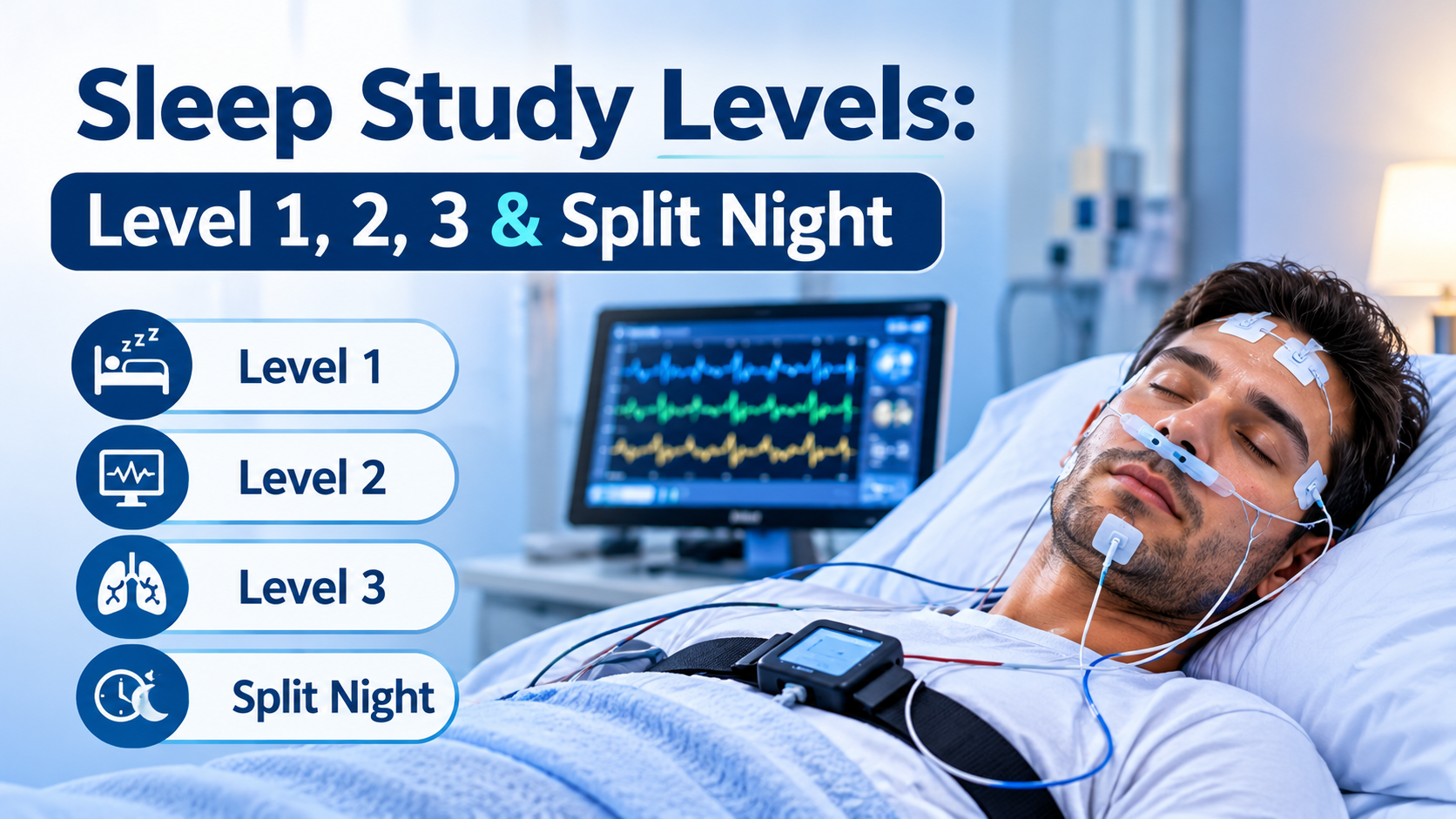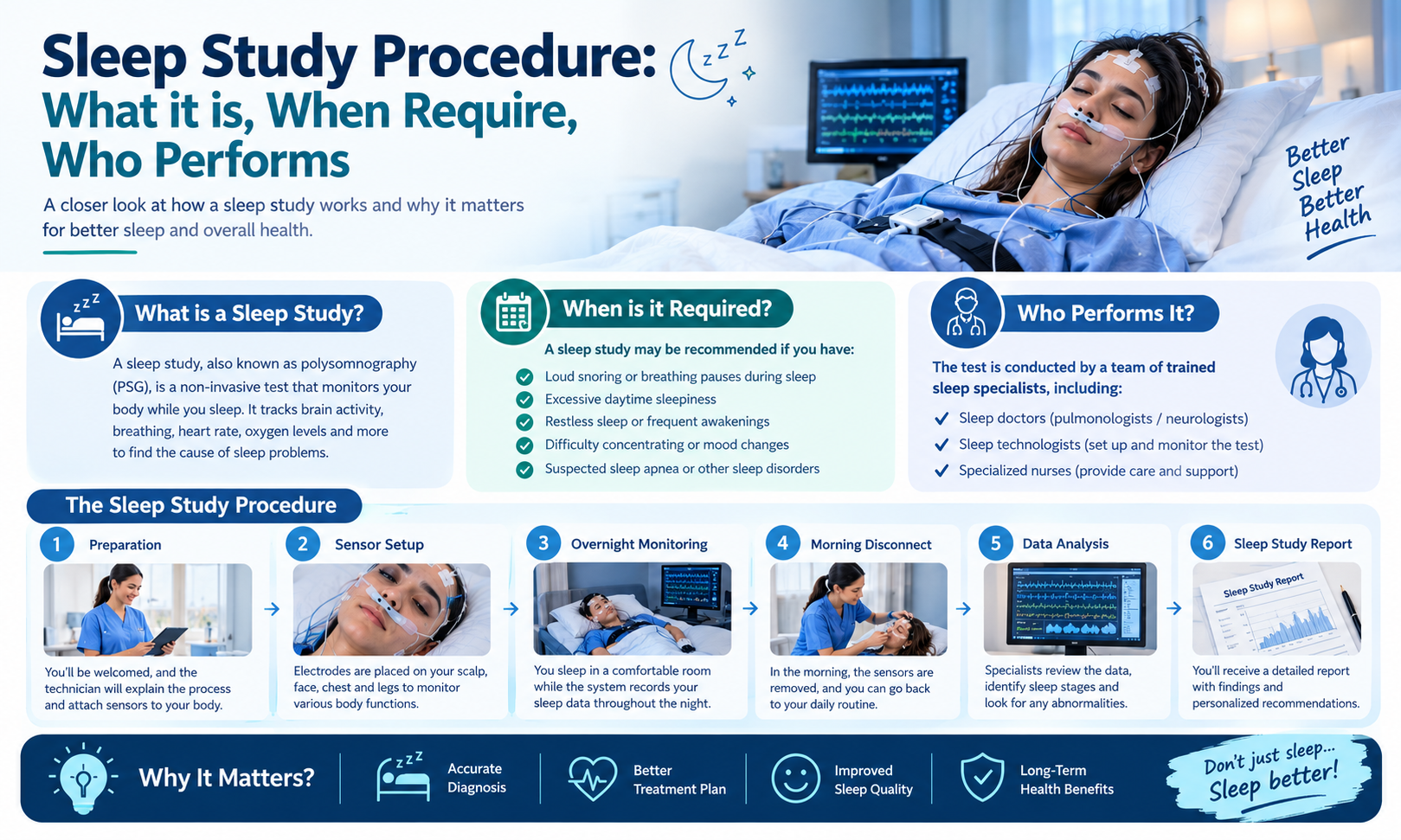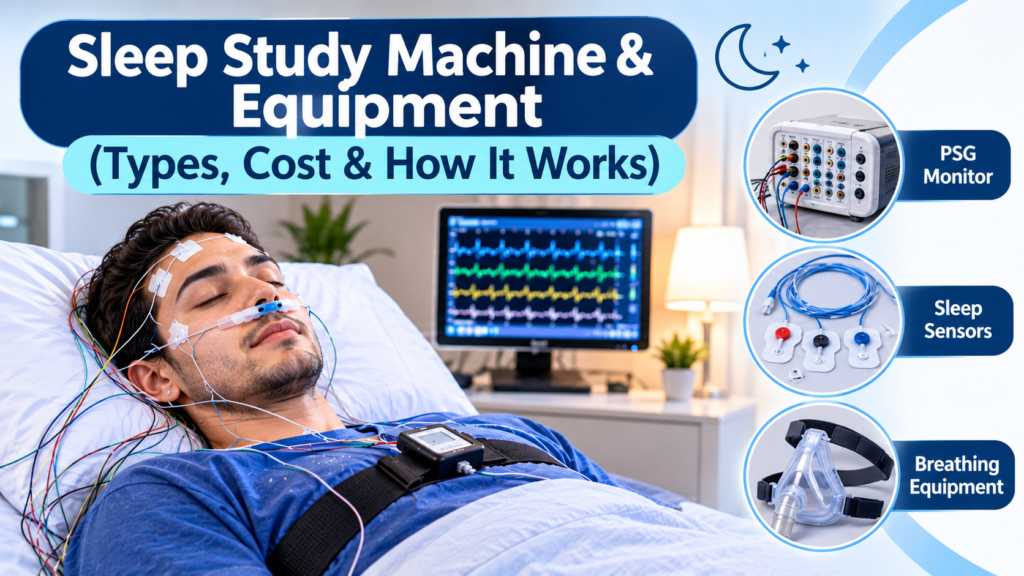
A sleep study machine is a medical recording device used to monitor different body functions while a person sleeps. Depending on the type of sleep test, it can record breathing patterns, airflow, oxygen saturation, heart rate, chest and abdominal movements, brain activity and other sleep-related signals.
These machines are use in sleep laboratories and home sleep testing to help healthcare professionals investigate conditions such as obstructive sleep apnea (OSA) and other sleep disorders.
The type of sleep study machine required depends on the test being perform. A full polysomnography (PSG) system records several physiological signals, including brain activity and eye movements, while a portable home sleep study machine generally focuses on breathing, airflow, oxygen levels and heart rate.
Quick answer: A sleep study machine records physiological signals during sleep to help assess possible sleep disorders. The equipment may be used in a sleep lab or at home. Its price depends on the type of study, recording channels, sensors, software, brand and included accessories.
Quick Overview: Sleep Study Machines
| What you want to know | Quick answer |
|---|---|
| What is a sleep study machine? | A recording system that monitors body functions during sleep |
| What does it measure? | Depending on the model, breathing, airflow, oxygen levels, heart rate, brain activity and movements |
| Where is it used? | Sleep laboratories, hospitals, clinics and approved home-testing setups |
| What are the main types? | Type 1, Type 2, Type 3 and Type 4 sleep study systems |
| Can it be used at home? | Yes. Certain portable systems are designed for home sleep testing |
| Does it treat sleep apnea? | No. It records information for assessment; CPAP and BiPAP are treatment devices |
| What affects its price? | Recording channels, sensors, technology, software, brand and support |
What Is a Sleep Study Machine?
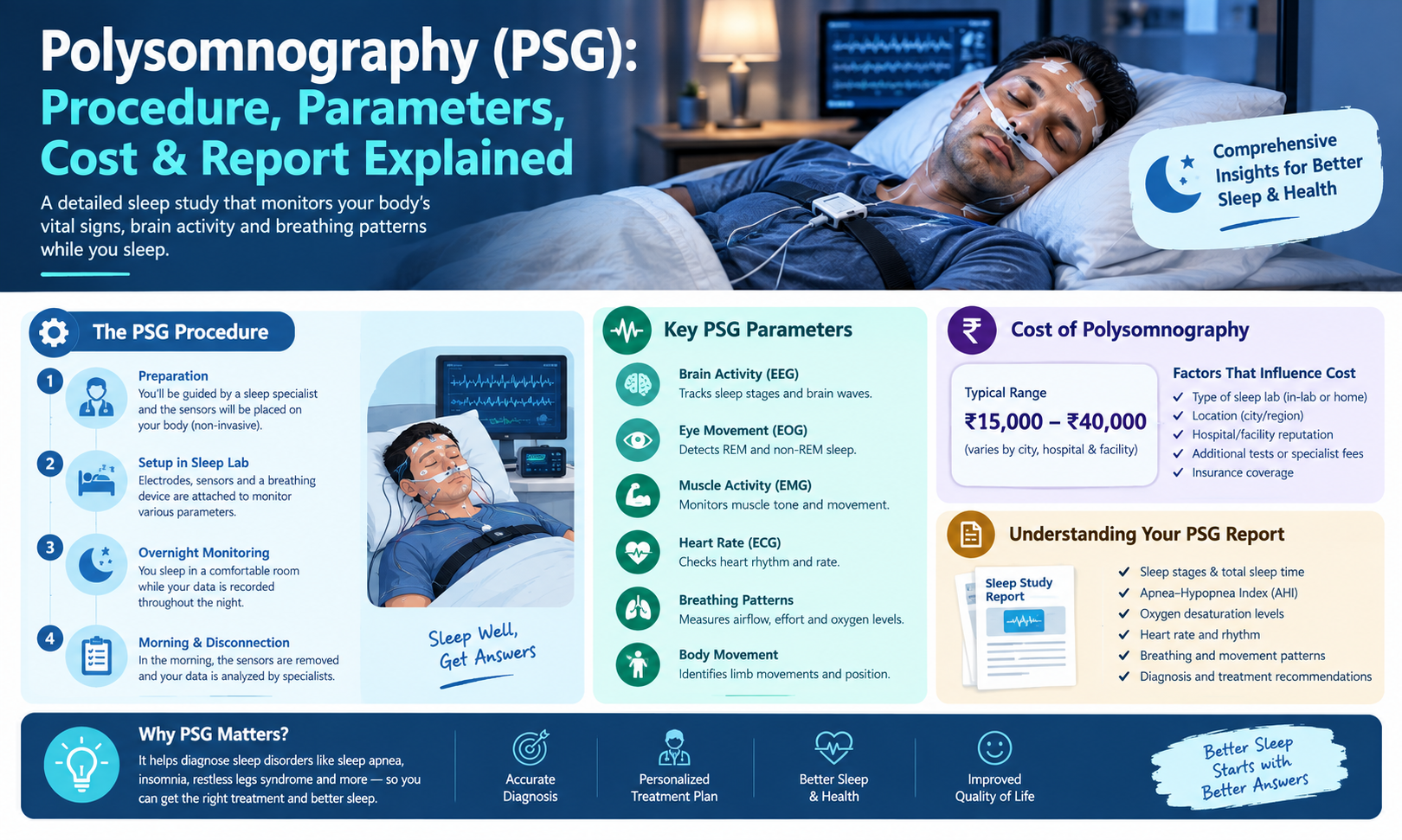
A sleep study machine is a diagnostic recording system that collects information about your body while you sleep. It is also commonly called a sleep test machine, sleep monitoring device or sleep study test machine.
The equipment uses sensors attached to different parts of the body. These sensors detect physiological signals and send them to a recording unit, where the information is store for later analysis.
For example, a sleep study may record:
- Breathing patterns and airflow through the nose or mouth
- Blood oxygen saturation (SpO₂)
- Heart rate and, in some systems, heart rhythm
- Chest and abdominal movements during breathing
- Brain activity to identify sleep stages
- Eye movements and muscle activity
- Body position, snoring and leg movements, depending on the system
Not every sleep study machine records all these parameters. A portable home sleep apnea testing device generally records fewer signals than a comprehensive polysomnography system.
The recorded information is reviewed and interpreted by trained healthcare professionals. The machine collects the data, it does not independently confirm a medical diagnosis.
How Does a Sleep Study Machine Work?
A sleep study machine works by collecting signals from sensors placed on the body before the person goes to sleep.
The sensors detect specific activities, such as airflow, breathing effort, oxygen saturation and brain activity. The recording unit stores these signals throughout the test. Once the recording is complete, the data is reviewed and analysed to identify patterns that may indicate a sleep-related problem.
The exact process depends on the type of equipment being used.
A typical recording process involves:
- Initial setup: The sleep study equipment is prepared according to the prescribed test.
- Sensor placement: Sensors are attached to the required body areas, such as the finger, nose, chest, abdomen or scalp.
- Signal recording: The device starts recording the selected physiological parameters.
- Overnight monitoring: The machine stores the signals while the person sleeps.
- Data transfer: The recorded information is downloaded or transferred for analysis.
- Report preparation: A trained professional reviews the recording, and a qualified doctor interprets the findings in the clinical context.
The number and type of sensors depend on whether the test is a full polysomnography or a limited-channel home sleep test.
What Does a Sleep Study Machine Measure ?
Sleep monitoring equipment is capable of recording the parameters below. It is important to check or confirm what kind of parameters a specific sleep study machine covers before booking. Make sure that it covers your requirements. Most of the lab-based polysomnography covers all major lists, while home recorders focus mainly on breathing and oxygen.
| Parameter | What It Measures |
| Brain activity (EEG) | Electrical activity of the brain, used to determine sleep stages in PSG |
| Eye movements (EOG) | Eye activity, which helps identify REM sleep |
| Muscle activity (EMG) | Muscle tone and movement, usually at the chin |
| Heart activity (ECG) | Heart rate and rhythm throughout the night |
| Oxygen saturation (SpO2) | Blood oxygen level, measured with a finger probe |
| Airflow | Air moving in and out through the nose and mouth |
| Respiratory effort | Chest and abdominal movement while breathing |
| Snoring | Snoring sounds or vibration |
| Leg movements | Limb movements during sleep |
| Body position | Whether you sleep on your back, side, or front |
Types of Sleep Study Machines
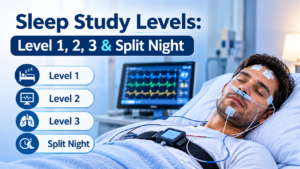
In India, sleep studies are usually described by level. The level tells you how much the machine records and whether a technician is present. Here is how the equipment differs.
1. Level 1 Sleep Study Equipment
Level 1 is known as complete polysomnography (PSG), which is conducted overnight in a sleep laboratory with a technician present. The technicians present there keep records of multiple physiological parameters, including at least seven but often more than sixteen.
These include signals from your brain activity (EEG), eye movement (EOG), and muscle tone (EMG), as well as the electrical activity of your heart (ECG). Additionally, these recordings also monitor respiratory activity through the use of airflow sensors to measure airflow in and out of your lungs, as well as an effort belt to determine how hard you are working to breathe. Oxygen saturation is also monitored using an oximeter.
2. Level 2 Sleep Study Machine/Polysomnography
A Level 2 sleep study uses an at-home portable machine that is similar to the machines used in a laboratory PSG (polysomnogram). The only difference is that it does not have a technologist in the room. The portable nature of the equipment allows for overnight testing in a patient’s home or using a home sleep study test system.
- Additional Parameters: There are additional channels available to record brain activity, which will allow for the scoring of sleep stages.
- Portability Equipment: The recorder itself is very small in size, which is enough for a patient to place on their own bed while they sleep.
- Recording Overnight: The technician typically places the sensors on the patient’s body during the late afternoon/early evening hours, then leaves. The portable recorder automatically captures all of the recordings throughout the night.
- Preparation of Report: The technician downloads the information from the recorder upon completion of the study, scores the data, and compiles it into a final report for review by the physician.
3. Level 3 Sleep Study Machine
A Level 3 Sleep Test device is a portable monitoring system that monitors breathing patterns and tracks at least three different parameters.
- Breathing pattern
- Respiratory effort
- Oxygen saturation levels
Many of these devices will help you track additional parameters, including heart rate, snore frequency, and body position while the individual sleeps. The major limitation of a level three sleep testing device is the fact that it does not have sensors to detect brain wave activity. This is the reason it has the following limitations.
- They cannot determine the stage of sleep an individual is in during each cycle.
- How long they are actually asleep
- The number of arousals occurring throughout their sleep period.
These machines are generally only used to diagnose obstructive sleep apnea and can be done using this type of equipment at home.
Home Sleep Study Test Equipment
Home sleep study test equipment is at par in size with the lab system. It mainly depends on the test. Some of the major elements of this Sleep Study test machine might include.
- Portable recording device
- Pulse oximeter (Finger probe)
- Nasal airflow sensor (Cannula)
- Respiratory effort belts for the chest and abdomen
- Body position sensor
- EEG, EOG and EMG electrodes (Level 2 kits only)
- Connecting cables and accessories
- Carrying or storage case
How Is a Home Sleep Study Machine Used?
The process is simple from the patient’s side:
- Equipment provided: The kit with the sleep study machine and other equipment is delivered to your home. A technician might bring it to you too.
- Device setup: A technician will fit the sensor or show you how to do it yourself. It depends on the type of test to be conducted.
- Sensors attached: The belts, nasal sensor, and finger probe will be attached to your body just before you go to bed.
- Position: You sleep in your own bed in the same way you do on a daily basis. But you have to ensure that you do it with sensors on.
- Data recorded overnight: The machine records the complete data throughout the night.
- Equipment collected: The kit is picked up or returned the next morning after completion of the test.
- Report: The complete data from the latest test is analyzed, and a report goes to an expert for analysis.
Sleep Study Machine vs. CPAP/BiPAP Machine
These two machines often get mixed up because both are used for sleep apnea. They do very different jobs.
| Sleep Study Machine | CPAP/BiPAP Machine |
| This one is used for testing and diagnosis | These devices are used for treatment |
| This records the physiological data. | This device delivers positive airway pressure through a mask |
| Produces a sleep study report | Keeps the airway open during sleep |
| Used for one or two nights of testing | Used every night as prescribed |
A sleep study machine is not a CPAP, BiPAP, or any other PAP therapy machine. The test usually comes first. If it confirms sleep apnea, the doctor may then prescribe PAP therapy.
Sleep Monitoring Equipment: What Is Included?
The sleep monitoring equipment generally includes the following:
- Recording Unit
- Sensors
- Respiratory Belts
- Oximeter
- EOG, EEG, EMG Sensors
- Airflow Sensors
- Computer***
- Software***
- Accessories
- Cables
Sleep Study Test Cost & Price
Sleep study machine costs vary a lot based on the type of test it covers and the parameters. There are certain factors that regulate the price of these machines.
- Level or type of study supported
- Number of channels
- Number of parameters recorded
- Brand
- Recording technology
- Software
- Accessories included
- Warranty and support
- New or refurbished equipment
2. Sleep Study Machine Price Range
The table below shows the sleep study machine price for each type of types.
| Equipment Type | Typical Price Range |
| Level 2 Sleep Test Machine | ₹56,500-₹5,60,000 |
| Level 3 Sleep Test Machine | ₹64,000 and ₹5,50,000 |
Sleep Study Machine for Home vs Sleep Lab
Let us compare study machines based on their lab and home setup. Check below.
| Feature | Home Equipment | Sleep Lab Equipment |
| Portability | High | Low |
| Set-up | Portable kit | Dedicated room and system |
| Environment | Patient’s own bed | Sleep laboratory |
| Monitoring | Depends on the device | Can be full PSG |
| Technician | Depends on the service | Usually present all night |
| Parameters | Depends on the device | Can be extensive |
How Many Channels Does a Sleep Study Machine Have?
A channel in a sleep study machine consists of one recorded signal, where Level 3 recorders consist of 3 to 7 channels, which are mainly used for breathing and oxygen. However, Level 1 and Level 2 PSG machines generally consist of a minimum of 7 channels and 16 maximum channels.
A Higher channel count does not guarantee that the machine is right for the purpose you want it for. Make sure the channels consist of the specific tests you want it for. A healthcare expert will specify the device name and other specifications that you might need for your test.
What Is a 32-Channel Sleep Study Machine?
A 32-channel sleep study machine (PSG) is a Polysomnogram System that includes 32 signal inputs. These include EEG, EOG, EMG, ECG, airflow, effort, oxygen saturation, and Position. This device is typically located in a sleep laboratory or other clinical setting; however, the number of input channels utilized varies from study to study.
Sleep Study Machine Maintenance & Accessories
A well-maintained machine gives cleaner recordings and fewer failed tests. Regular care of this sleep machine includes:
- Sensor replacements: Sensors are often replaced based on their frequency of use. Some are worn or single-use sensors that have a replacement schedule.
- Cable maintenance: Always ensure that you check for kinks, loose pins, and damaged insulation.
- Cleaning: Make sure you clean the device and reusable parts based on the instructions generally given in the manual.
- Battery and power: Batteries often require frequent replacement. Most machines have rechargeable batteries, while others have batteries that need to be manually replaced.
- Software updates: Always keep your machine’s software up to date while using it. You can check the manual for more instructions on how to do it.
- Calibration and service: Make sure you follow the manufacturer’s service schedule.
- Storage and transport: There are cases for the machines, especially home machines, which are portable and should be kept in these cases after use.
Common Sleep Study Machine Accessories
These are some frequent accessories found in sleep study machines below.
- Sensors
- Effort belts
- Oximeter probes
- Electrodes
- Cables
- Connectors
- Carrying case
Frequently Asked Questions (FAQs)
1. What is a sleep study machine?
Ans: A sleep study machine is the equipment that is utilized to make recordings throughout a sleep study. The equipment records the signals of your body, including breathing patterns, oxygen levels, heart rhythm, and sometimes brain waves while sleeping. The physician will review the recorded information to diagnose a possible sleep disorder, i.e., sleep apnea.
2. What is a sleep test machine?
Ans: A sleep test machine is just a variant of the sleep study machine used frequently. These are generally related to the same equipment, which records the physiological signals of your body during an overnight sleep study.
3. How does a sleep study machine work?
Ans: Sensors are placed upon your body prior to going to bed. The sensors send their signals to the equipment, which records them throughout the night. The information collected by the machine is analyzed using specialized software and interpreted by a technologist. A physician will review the results of the analysis after reviewing the final report.
4. What does a sleep study machine measure?
Ans: Sleep study machines come with a lot of features. Some of them are listed below.
• Brain Waves
• Eye Movements
• Muscle Activity
• Heart Rhythm
• Oxygen Saturation
• Air Flow
• Breathing Patterns
• Snoring
• Leg Movement
• Body Position
Typically, home-use devices do not have enough input capabilities to obtain this much data compared to laboratory sleep testing equipment.
5. How much does a sleep study machine cost?
Ans: Home recorder machines generally cost less than full PSG systems. The cost of a sleep study machine depends on the level of study, channels, software, brand, accessories, and support. Range from ₹56,500-₹5,60,000+
6. What equipment is used for a home sleep study?
Ans: A home kit machine usually includes a portable recorder, a finger oximeter, a nasal airflow sensor, chest and abdominal belts, and cables. Level 2 kits also include EEG, EOG, and EMG electrodes.